Table of Contents
When investing in solar energy for your home, choosing the right solar inverter is just as critical as selecting quality panels. Often called the “heart” of your solar power system, the inverter plays a fundamental role in converting the sun’s energy into electricity you can actually use. But with dozens of brands and models flooding the Australian market, how do you identify the best solar inverters for your specific needs?
In this comprehensive comparison guide, we’ll break down everything you need to know about solar inverters in 2025, including the top-performing brands, their features, pricing, and which option might be the perfect fit for your home.
What is a Solar Inverter?
A solar inverter is the essential device that converts the direct current (DC) electricity generated by your solar panels into alternating current (AC) electricity, which powers your household appliances. Without this critical conversion, the energy captured by your panels would simply be unusable for your home.
Beyond basic conversion, modern solar and power inverter systems also monitor your system’s performance, optimise power output, and ensure safe grid connection. Essentially, your solar panel inverter manages the entire energy flow from panels to power points, making it the most technologically sophisticated component in your solar setup.
Types of Solar Inverters Available in Australia
Understanding the different types of inverters available helps you make an informed decision based on your property’s unique requirements.
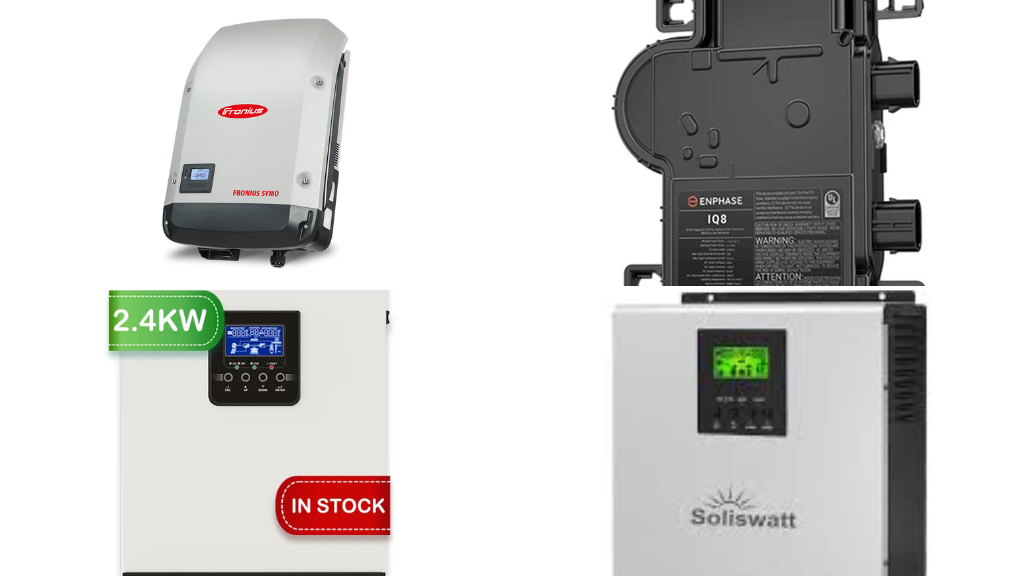
- String Inverters are the most common and cost-effective option for Australian homes. A single central unit manages all your solar panels, making installation straightforward and cost-effective. These work best for properties with minimal shading and simple roof layouts. String inverters from reputable brands typically cost between $800 and $2,000, depending on capacity and features.
- Microinverters represent cutting-edge technology where each solar panel has its own small inverter attached. This setup means that if one panel underperforms due to shade or debris, it doesn’t drag down the entire system’s output. While microinverters carry a premium price tag of $2,400 to $2,600 for a 5kW system, they’re ideal for complex roofs or properties with shading issues.
- Hybrid Solar Inverter systems combine traditional inverter functionality with battery storage capability. These versatile units allow you to store excess solar energy for use during evening hours or power outages. As solar battery price continues to fall and technology becomes more efficient, hybrid inverters are increasingly popular among Australian homeowners planning for energy independence and future-proofing their solar investment.
- Off Grid Solar Inverter systems are designed for properties without a grid connection and are a core part of many Off Grid Solar Power Systems in regional and rural Australia. These specialised inverters work alongside battery banks to provide complete energy independence, managing both solar input and stored battery power to meet your household’s electricity needs around the clock. When planning an off-grid setup, it’s important to factor in the total off grid solar system cost, including panels, inverter, batteries, and installation, rather than just comparing inverter prices in isolation.
Top 10 Solar Inverters in Australia for 2025
Based on installer feedback, performance testing, and real-world reliability data, here are the best solar inverters dominating the Australian market this year:
Quick Comparison Table
| Brand | Price Range (5kW) | Max Efficiency | Standard Warranty | Best For | Australian Support |
| Fronius | $1,700 – $2,000 | 96-97% | 5-10 years | Premium quality & longevity | Excellent |
| Sungrow | $800 – $1,200 | 98%+ | 10 years | Best value & reliability | Excellent |
| GoodWe | $800 – $1,200 | 97.6% | 10 years | Complex roofs & budget | Good |
| Enphase | $2,400 – $2,600 | 97%+ | 25 years | Shaded roofs & monitoring | Excellent |
| SolarEdge | $1,800 – $2,000 | 97.5-99% | 12 years | Complex layouts & optimisation | Excellent |
| Huawei | $1,100 – $1,300 | 98.4% | 10 years | High efficiency | Limited |
| SMA | $1,700 – $2,000 | 97-98% | 5-10 years | Proven reliability | Good |
| Delta | $800 – $1,200 | 97.5% | 5-10 years | Mid-range performance | Good |
| Solis | $650 – $1,650 | 97.3% | 5 years (extendable) | Tight budgets | Limited |
| Sigenergy | $1,500 – $2,000 | 97.8% | 10 years | All-in-one energy systems | Good |
1. Fronius
Austrian manufacturer Fronius continues to lead the premium inverter segment, winning top installer awards for the fifth consecutive year. Known for exceptional build quality and long-term reliability, Fronius inverters feature robust cooling systems with large heatsinks and fans. While this premium quality comes at a cost—typically $1,700 to $2,000 for 5kW models—homeowners receive industry-leading warranties and local Australian support. Fronius achieves maximum efficiency ratings of 96-97%, and their reputation for lasting 15+ years makes them an excellent long-term investment.
2. Sungrow
As one of the world’s largest inverter manufacturers, Sungrow has built a stellar reputation in Australia since establishing its Sydney office in 2012. Their residential SG-RS series offers outstanding value, combining competitive pricing ($800 to $1,200) with impressive 98%+ efficiency ratings and standard 10-year warranties. Sungrow inverters include smart features such as PID recovery functions and excellent monitoring capabilities. The brand’s commitment to Australian Consumer Guarantees and responsive local support makes it a top choice for value-conscious homeowners.
3. GoodWe
Despite being a relatively newer player, GoodWe has rapidly gained market share by offering reliable performance at budget-friendly prices. Their inverters feature multiple MPPT inputs, making them particularly effective for complex roof orientations where panels face different directions. GoodWe produces inverters for major brands such as GE and LG, demonstrating its manufacturing expertise. With prices ranging from $800 to $1,200 and solid efficiency ratings around 97.6%, GoodWe represents excellent value without compromising on essential features.
4. Enphase
Revolutionising solar technology with microinverters, Enphase offers unmatched system reliability and performance monitoring. Each panel operates independently, maximising energy harvest even with partial shading. While the investment is higher at $2,400 to $2,600, Enphase systems deliver superior safety (all AC wiring on the roof), exceptional monitoring detail, and impressive longevity. The brand has developed a cult-like following among solar enthusiasts who prioritise performance and system visibility.
5. SolarEdge
SolarEdge pioneered DC-optimised inverter technology, placing power optimisers on each panel while maintaining centralised conversion. This hybrid approach delivers many benefits of microinverters at a more competitive price point. Recent pricing adjustments in 2025 have made SolarEdge systems ($1,800 to $2,000) more accessible while maintaining their reputation for exceptional efficiency, comprehensive warranties, and advanced monitoring capabilities. Their technology particularly shines on roofs with complex layouts or shading challenges.
6. Huawei
Chinese tech giant Huawei brings impressive innovation to solar inverters with sleek designs and industry-leading 98.4% maximum efficiency. Their smart features and competitive pricing made them popular choices. However, Huawei’s recent withdrawal from direct Australian operations creates warranty service concerns. Some installers now partner with local distributors to maintain support, but potential buyers should carefully verify warranty arrangements.
7. SMA
This German manufacturer built its reputation on bulletproof reliability and engineering excellence. SMA inverters traditionally served as the premium benchmark before Fronius rose to prominence. Their Sunny Boy range offers rock-solid performance, typically priced between $1,700 and $2,000. While SMA lacks some cutting-edge features of newer competitors, its proven track record spanning decades makes it a safe choice for conservative buyers prioritising longevity over the latest technology.
8. Delta
Delta Electronics provides reliable mid-range inverters that balance performance with affordability. Priced between $800 and $1,200, Delta inverters deliver decent efficiency and reasonable warranties. While they don’t dominate any particular category, they represent a solid middle-ground option for budget-conscious homeowners seeking established brand reliability without premium pricing.
9. Solis
Entering the value segment, Solis (Ginlong Technologies) offers competitively priced inverters starting around $650 for entry models. Their Residential 5G series includes useful features such as wide MPPT voltage ranges and integrated export control. However, Solis comes with standard 5-year warranties (extendable to 10 years), and some users report challenges obtaining prompt technical support. These inverters suit extremely budget-limited projects but represent a compromise on warranty coverage and support quality.
10. Sigenergy
A relative newcomer, Sigenergy offers innovative modular all-in-one energy solutions incorporating AI technology. Their systems integrate inverters with battery storage and advanced energy management. While pricing sits between mid-range Sungrow and premium Fronius, Sigenergy appeals to tech-forward homeowners seeking comprehensive energy solutions. As a newer brand, long-term reliability data remains limited, but early installations show promise.
Key Factors When Choosing the Best Solar Inverters
Efficiency Ratings directly impact how much solar energy converts into usable electricity. Top-tier inverters achieve 97-98.4% maximum efficiency, meaning minimal energy loss during conversion. Even small efficiency differences compound significantly over a system’s 25-year lifespan, affecting your overall energy savings and return on investment.
Warranty Coverage signals manufacturer confidence in product quality. Minimum acceptable warranty is 5 years, with 10 years being ideal for quality inverters. Premium brands often offer extended warranties up to 20-25 years for an additional cost. Critically, ensure the company maintains an Australian office—lengthy warranties from offshore manufacturers with no local presence offer little practical value when issues arise.
Australian Presence cannot be overstated. Local offices provide crucial support for warranty claims, technical assistance, and replacement parts. Many solar installers go out of business before your system’s lifespan expires, making direct manufacturer contact essential. Always verify the brand maintains Australian contact numbers and local service capabilities.
Monitoring Capabilities have become standard but vary significantly in sophistication. Better inverters offer detailed real-time monitoring via smartphone apps, showing production data, consumption patterns, and system health alerts. Advanced monitoring helps identify issues quickly and optimise energy usage patterns.
Cooling Systems affect longevity, particularly in Australia’s harsh climate. Some manufacturers, such as Fronius, use active fan cooling, while others rely solely on passive heatsinks. While fan systems add a potential failure point, they can extend inverter lifespan by preventing heat-related degradation—a worthwhile tradeoff in hot Australian conditions.
Making the Right Choice for Your Home
Selecting among the best solar inverters depends on several property-specific factors:
- For simple, unshaded roofs: Quality string inverters from Sungrow, GoodWe, or Fronius provide excellent performance and value.
- For complex roofs or shading issues: Microinverters from Enphase or DC-optimised systems from SolarEdge maximise energy harvest when panels face multiple directions or experience partial shade.
- For budget-conscious projects: Sungrow and GoodWe deliver the best balance of price, performance, and reliability without excessive compromise.
- For premium quality seekers: Fronius and SMA provide exceptional build quality, comprehensive support, and proven longevity that justifies premium pricing.
- For future battery plans: Choose hybrid-ready inverters from Sungrow, Fronius, or SolarEdge to avoid costly future upgrades. Many Australian households now pair their solar systems with a battery, so understanding typical 6kw solar battery cost ranges can help you choose an inverter that’s compatible with your long-term storage plans and budget.
Conclusion
Choosing the right solar panel inverter represents a critical decision impacting your system’s performance, longevity, and overall satisfaction for decades. While budget considerations matter, prioritising quality, local support, and appropriate technology for your specific situation delivers far better long-term value than simply selecting the cheapest option.
The Australian solar market offers exceptional inverter choices across all price points in 2025. Whether you select proven performers such as Fronius and Sungrow, cutting-edge technology from Enphase and SolarEdge, or value options from GoodWe and Delta, ensure your choice includes adequate warranty coverage and Australian support.
At SPS Energy, we help homeowners navigate these decisions, matching inverter technology to your property’s unique requirements and energy goals. Our expert team stays current with the latest solar inverter developments, ensuring you receive honest advice focused on your best interests rather than highest margins.
Ready to explore the best solar inverters for your home? Contact SPS Energy today for personalised recommendations and competitive quotes on complete solar systems featuring quality inverters from Australia’s most trusted brands.