Table of Contents
Every solar panel brand promises the world. This guide cuts through the noise — comparing efficiency ratings, real-world costs, warranty terms, and long-term performance so you can choose the right panels for your home with confidence.
- In 2026, good residential solar panels achieve 20–23.6% efficiency. N-type technology (TOPCon, HJT, IBC) has made older P-type PERC panels largely obsolete.
- A quality 6.6kW system costs $4,000–$6,500 after STC rebates — premium systems with SunPower or REC panels run $6,500–$8,500.
- Warranty matters more than most buyers realise. The best product warranties run 25–40 years, but the manufacturer needs to still exist when you make a claim.
- For most Australian homes, Jinko Tiger Neo or Trina Vertex S+ deliver exceptional value. Aiko Neostar leads efficiency at a surprisingly competitive price point.
- SunPower’s 40-year warranty is industry-leading but note the company’s 2024 bankruptcy affected pre-acquisition legacy customers — always check financial backing.
What to Compare When Choosing Solar Panels
Walk into any solar quote comparison and you’ll immediately encounter a wall of specs — efficiency percentages, wattage ratings, power output guarantees, temperature coefficients, and degradation rates. For most homeowners, it’s overwhelming. Here’s the thing though: you don’t need to master all of it. You need to understand which metrics actually affect how much money you’ll save over the next 25 years.
When conducting a solar panels comparison, there are five things that genuinely matter:
Efficiency determines how much power you generate from a given roof area. A 23% efficient panel produces more electricity from the same space than a 20% panel. If your roof is limited, this becomes critical.
Cell technology underpins everything else — efficiency, temperature performance, degradation rate, and to some extent, cost. The market has shifted almost entirely to N-type cells in 2026, and understanding the difference between TOPCon, HJT, and IBC will help you compare apples to apples.
Cost needs to be evaluated as Solar Panel Installation Cost after rebates, not just panel hardware price. What looks like a cheap system can become expensive when you factor in a lower-quality inverter, poor installation, or early panel failure without warranty support.
Warranty is your insurance policy. A 40-year warranty is meaningless if the manufacturer goes bust in year 8. Likewise, a 12-year product warranty on a budget panel is a risk if it starts degrading faster than promised.
Degradation rate is the silent factor most buyers ignore. A panel that degrades at 0.3% per year versus one degrading at 0.6% per year sounds minor — but over 25 years, that compounds to a meaningful difference in total electricity produced and money saved.
Get these five right and the brand name matters far less than most marketing would have you believe.
Before comparing any other spec, confirm the panels are on the Clean Energy Council-approved list. Non-CEC panels make you ineligible for the federal STC rebate — which is worth $1,600–$4,200 depending on system size and location. The CEC also enforces safety and quality standards that give you important consumer protections.
Solar Panel Efficiency: What the Numbers Really Mean
Efficiency measures what percentage of sunlight hitting a panel’s surface is converted into usable electricity. A panel rated at 22% efficiency captures 22 watts of power from every 100 watts of sunlight energy it receives under standard test conditions (25°C, 1000 W/m²).
In practical terms, efficiency matters most when your roof space is limited. If you have a small north-facing roof, a higher-efficiency panel lets you fit more generating capacity into the same area. If you have generous roof space, a few percentage points of efficiency difference matters less — you simply use a few more panels.
Here’s where the Australian market sits in 2026:
A critical caveat: efficiency ratings are measured under Standard Test Conditions — a controlled lab environment at exactly 25°C. In real Australian conditions, where rooftop temperatures can reach 65–85°C on a hot summer day, all panels produce significantly less than their rated output. This is where temperature coefficient becomes the more useful number.
The Efficiency Trap: Why High Efficiency Isn’t Always Worth More Money
It’s a common misconception that a more efficient panel always means a better return on investment. Consider this: a 6kW system built from 15% panels and a 6kW system built from 22% panels will produce the same annual electricity — the difference is how many panels you need and how much roof space they occupy.
If you have ample roof space and a tighter budget, a reliable mid-range panel from a proven manufacturer at 20–21% efficiency will typically deliver comparable financial returns to a premium high-efficiency panel at significantly lower upfront cost. The exception is when you have limited north-facing roof area — in that case, every percentage point of efficiency translates directly to more power from your available space.
Cell Technology: TOPCon vs HJT vs IBC Explained
The single most important technological shift in solar over the past three years has been the industry-wide transition from P-type to N-type silicon cells. Understanding this distinction — and the three main N-type architectures — helps you decode the spec sheets and make a genuinely informed comparison.
Why N-Type Matters
Traditional P-type silicon cells (used in older PERC panels) are doped with boron. This makes them susceptible to a phenomenon called Light Induced Degradation (LID), where panels can lose 1–3% of output in their first weeks of exposure to sunlight. N-type silicon, doped with phosphorus instead, is essentially immune to LID — meaning N-type panels maintain closer to their rated output from day one and degrade more slowly over their lifetime.
By 2026, virtually all leading manufacturers have transitioned to N-type production. If you’re being quoted on older P-type PERC panels, it’s worth asking why.
TOPCon: The New Mainstream Standard
Tunnel Oxide Passivated Contact technology adds an ultra-thin passivation layer to N-type wafers, dramatically reducing electron recombination losses. The key advantage of TOPCon from a market perspective is that manufacturers can retrofit existing PERC production lines at relatively low capital cost — which is why TOPCon has become the dominant technology and offers the best efficiency-to-price ratio.
Typical TOPCon efficiency in mass production sits at 21–23%, with a temperature coefficient around -0.29 to -0.32%/°C. Jinko Tiger Neo, Trina Vertex S+, LONGi Hi-MO X6, and Canadian Solar’s HiHero series all use TOPCon cells. In Australian conditions, TOPCon panels perform very well and represent the value sweet spot for most homes.
HJT: Premium Temperature Performance
Heterojunction Technology combines crystalline silicon with thin layers of amorphous silicon, creating an extremely efficient passivation structure. The result is a panel with efficiencies of 22–23%+ and a temperature coefficient as low as -0.24 to -0.27%/°C — the best of any mainstream technology.
In practical terms, HJT panels lose less performance on a hot 40°C Australian day than TOPCon or IBC panels. The downside is that HJT requires entirely new manufacturing equipment — capital expenditure roughly three times higher than TOPCon — which keeps HJT panel prices somewhat higher. REC’s Alpha Pure-RX uses HJT technology and is the most widely available HJT panel in the Australian residential market.
IBC: Maximum Efficiency, Premium Price
Interdigitated Back Contact technology moves all electrical contacts to the rear of the panel, eliminating front-side metal grid lines that shade the cell surface. The result is a cleaner aesthetic and the highest achievable efficiency — with commercial panels reaching 22.8–23.6% and theoretical limits above 29%.
SunPower Maxeon (22.8%) and Aiko Neostar (up to 23.6%) both use IBC or ABC (All Back Contact) variants. The trade-off is manufacturing complexity and cost. Aiko is notable for delivering IBC-level efficiency at a price point closer to premium mid-range — making it the efficiency leader for homeowners with limited roof space who don’t want to pay SunPower prices.
| Technology | Efficiency Range | Temp Coefficient | LID Risk | Relative Cost | Key Brands |
| TOPCon | 21–23% | -0.29 to -0.32%/°C | None | $$ (mid) | Jinko, Trina, LONGi, Canadian Solar, JA Solar |
| HJT | 22–23%+ | -0.24 to -0.27%/°C | None | $$$ (upper mid) | REC Alpha Pure-RX, Panasonic |
| IBC / ABC | 22.8–23.6% | -0.27 to -0.30%/°C | None | $$$$ (premium) | SunPower Maxeon, Aiko Neostar |
| PERC (P-type) | 20–21% | -0.35 to -0.40%/°C | Yes (1–3%) | $ (budget) | Older budget brands, clearance stock |
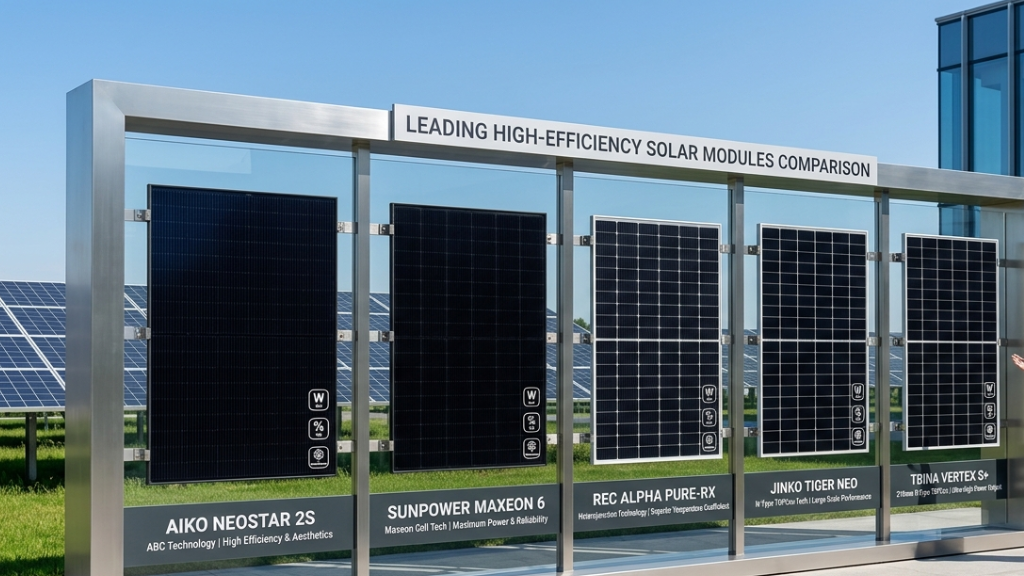
Brand-by-Brand Solar Panels Comparison (2026)
The following comparison covers some of the Best Solar Photovoltaic Panels available in the Australian market. Pricing reflects hardware-only retail estimates; fully installed system costs are covered in the next section.
| Brand / Model | Efficiency | Technology | Product Warranty | Performance Warranty | Year-25 Output | Price Tier | Best For |
| Aiko Neostar 2S | 23.6% | ABC (IBC variant) | 25 yr | 25 yr | ~87% | $$$ | Small or shaded roofs |
| SunPower Maxeon 6 | 22.8% | IBC | 40 yr | 40 yr | ~92% | $$$$ | Long-term premium investment |
| Winaico NGX Series | 23.0% | N-type Glass-Glass | 30 yr | 30 yr | ~88% | $$$$ | Coastal / harsh environments |
| REC Alpha Pure-RX | 22.6% | HJT (lead-free) | 25 yr | 25 yr | 92% | $$$ | Hot climates, coastal areas |
| Jinko Tiger Neo | 22.5% | N-type TOPCon | 25 yr | 30 yr | 87.4% | $$ | Best value residential |
| LONGi Hi-MO X6 | 22.0% | N-type TOPCon | 15 yr | 25 yr | ~86% | $$ | Budget-conscious homes |
| Trina Vertex S+ | 21.8% | N-type TOPCon | 25 yr | 25 yr | ~87% | $$ | Best overall value (most popular) |
| Canadian Solar HiHero | 21.4% | N-type TOPCon | 25 yr | 25 yr | ~86% | $$ | Reliable mid-range option |
| JA Solar DeepBlue 4 | 21.2% | N-type TOPCon | 25 yr | 25 yr | ~85% | $ | Entry-level N-type value |
| Tindo Solar | ~20.5% | Monocrystalline | 10 yr | 25 yr | 87.4% | $$$ | Locally made, ethical choice |
Note: Prices and specs vary by specific model, distributor, and installation date. Always request written quotes specifying exact model numbers.
Brand Deep-Dives: The Ones Worth Knowing
1. Aiko Neostar 2S (Efficiency Leader)
- Efficiency Up to 23.6%
- Technology ABC (N-type IBC)
- Product Warranty 25 years
- Temp Coefficient -0.30%/°C
- Price $80–$150/panel
Won the 2025 SolarQuotes Installers’ Choice Award. Delivers IBC efficiency at near mid-range pricing — outstanding for tight roofs.
2. SunPower Maxeon 6 (Warranty Leader)
- Efficiency 22.8%
- Technology IBC (N-type)
- Product Warranty 40 years
- Temp Coefficient -0.29%/°C
- Price $250–$300+/panel
Industry’s longest warranty. Requires digital registration within 6 months and authorised installer for full 40-year coverage. Post-2024 entity only; legacy customers from pre-acquisition are not covered.
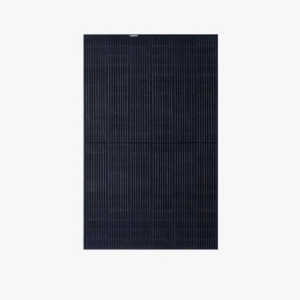
3. REC Alpha Pure-RX (Coastal & Hot Climate)
- Efficiency 22.6%
- Technology HJT (lead-free)
- Product Warranty 25 years
- Temp Coefficient -0.24%/°C
- Price $250–$300+/panel
Best-in-class temperature performance. Field testing shows 95.2% rated power at 45°C. ProTrust warranty through certified installers includes labour coverage. Strong choice for north Queensland and coastal properties.
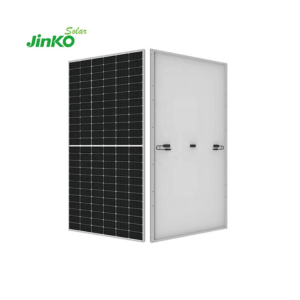
4. Jinko Tiger Neo (Value Champion)
- Efficiency Up to 22.5%
- Technology N-type TOPCon
- Product Warranty 25 years
- Perf. Warranty 30 years
- Price $80–$130/panel
World’s largest solar manufacturer. Dedicated Australian warehouse and local claims support at 1300 326 182 — covers orphaned customers if installer closes. Outstanding efficiency-to-price ratio.
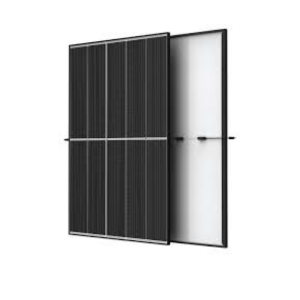
5. Trina Vertex S+ (Most Popular in AU)
- Efficiency Up to 21.8%
- Technology N-type TOPCon
- Product Warranty 25 years
- Temp Coefficient -0.30%/°C
- Price $80–$120/panel
Voted #1 best-value panel by Australian solar installers for 2025. Strong brand support, reliable supply chain, and consistent performance across Australia’s varied climates.
Solar Panel Costs in Australia 2026
Solar pricing in Australia operates at two levels: the cost of individual panels as hardware, and the cost of a fully installed system. The number that matters most to your budget is always the fully installed price after government rebates — not the per-panel sticker price.
Fully Installed System Costs (After STC Rebates)
| System Size | Approx. Panels | Before STCs | STC Rebate | After STCs | Est. Annual Saving |
| 5kW | ~12 panels | $5,250 | $2,100–$3,200 | $3,000–$5,000 | $1,100–$1,600 |
| 6.6kW | ~15 panels | $6,930 | $2,800–$4,200 | $4,000–$6,500 | $1,500–$2,500 |
| 8kW | ~18 panels | $8,400 | $3,400–$5,100 | $5,000–$8,000 | $1,800–$2,800 |
| 10kW | ~22–24 panels | $10,500 | $2,500 | $8,000–$10,500 | $2,400–$3,500 |
| 13.2kW | ~30–32 panels | $13,800 | varies | $10,000–$14,500 | $3,500–$4,800 |
The national average installed price in 2026 sits at $0.88–$0.95 per watt after the STC discount… typically $6,500–$8,500 for a 6.6kW Solar System.
Individual Panel Pricing by Brand
| Brand | Approx. Per-Panel Price | Tier |
| JA Solar, Risen, budget brands | $80–$110 | Budget |
| Jinko Tiger Neo, Trina Vertex S+, LONGi | $80–$150 | Mid-Range |
| Aiko Neostar, Canadian Solar HiHero | $120–$180 | Upper Mid |
| REC Alpha Pure-RX, Winaico | $200–$280 | Premium |
| SunPower Maxeon, Tindo Solar | $250–$320+ | Ultra Premium |
The federal Small-scale Technology Certificate (STC) scheme decreases by approximately 6.7% each January 1st until the scheme ends entirely in 2030. On January 1, 2026, the deeming period dropped from 6 to 5 years — reducing the rebate on a 6.6kW system by roughly $500–$600 versus 2025. Waiting until 2027 costs more. Victorian households can also stack the Solar Homes Program rebate (up to $1,400 additional) on top of the federal STC discount.
Payback Period and ROI
The average payback period for a residential solar system in Australia in 2026 is 3.5 to 6 years for standard systems, with premium setups taking 5–8 years. After payback, the system generates effectively free electricity for another 19–21 years — a long-term return on investment typically between 200–300% over the panel lifetime. For households with high daytime electricity consumption — home office, pool pump, air conditioning, or EV charging — payback periods can be even shorter.
Warranty Guide: Product vs Performance vs Labour
Solar panel warranties come in three distinct types, and understanding the difference is essential — because the fine print can significantly affect what you’re actually protected against.
Product Warranty (Manufacturing Defects)
The product warranty, sometimes called the materials or workmanship warranty, covers physical defects — delamination, junction box failures, frame corrosion, cell cracking from manufacturing faults. Standard product warranties run 12–25 years, with premium brands like Winaico and SunPower extending to 30–40 years.
What’s crucial here is that a warranty is only as valuable as the company standing behind it. SunPower’s bankruptcy filing in August 2024 — and the new entity’s decision not to assume warranty liability for pre-September 2024 installations — was a stark reminder that a 25-year product warranty means nothing if the manufacturer no longer exists. When comparing warranties, factor in the manufacturer’s financial stability and Tier 1 Bloomberg bankability status.
Performance (Linear Power Output) Warranty
The performance warranty guarantees your panel will still produce a minimum percentage of its rated output after a specified period. Most quality brands guarantee 80–90% after 25 years, with the best offering:
- SunPower Maxeon: 92% at year 25 (40-year warranty)
- REC Alpha Pure-RX: 92% at year 25 (linear degradation from year 1)
- Jinko Tiger Neo: 87.4% at year 30 (30-year performance warranty)
- Trina Vertex S+: ~87% at year 25
- Winaico NGX: ~88% at year 30 (30-year product + performance)
Note that the degradation guarantee compounds over time. Premium panels degrading at 0.3% annually versus budget panels at 0.6% may seem marginal — but over 25 years, that 0.3% annual difference amounts to roughly 7–8% more total lifetime electricity production from the premium panel.
Labour (Workmanship) Warranty
Often overlooked in solar comparisons, the labour warranty covers the cost of an installer coming back to fix installation-related issues. Standard installer workmanship warranties run 5–10 years and are provided by your installer, not the panel manufacturer. REC’s ProTrust Warranty through certified installers extends labour coverage to 25 years — an exceptional offering that significantly reduces long-term ownership risk.
Real-World Performance: Heat, Shade & Long-Term Degradation
Spec sheets are measured in controlled lab conditions at 25°C. Your roof is not a lab. Understanding how panels behave in real Australian conditions — extreme heat, partial shading, coastal salt air, and the slow march of degradation — is arguably more useful than the headline efficiency figure.
Temperature Performance in Australian Heat
Solar panels lose output as they heat up. On a typical summer day in Queensland or Western Australia, rooftop cell temperatures commonly reach 65–75°C. On extreme days mounted on a dark roof with no airflow, temperatures can hit 85°C. At 40°C ambient temperature, you can expect a 12–16% drop in output from a standard panel.
The temperature coefficient tells you exactly how much output a panel loses per degree above 25°C. Here’s why this matters practically: if two panels are rated at the same efficiency but one has a temperature coefficient of -0.24%/°C (HJT) versus -0.38%/°C (standard mono PERC), at a cell temperature of 65°C the HJT panel is producing meaningfully more electricity — not because of better efficiency ratings, but because it handles heat better.
For Australian homes, particularly in warm inland and northern regions, temperature coefficient is one of the most practical performance differentiators between panel technologies.
Shading Performance
Even minor shading from a chimney, antenna, or nearby tree can significantly reduce output — particularly in systems using string inverters, where the performance of the weakest panel affects the whole string. If your roof has any partial shading, three things help: half-cut cell technology (most modern panels now use this), microinverters or DC optimisers at each panel, and selecting panels with better low-light performance characteristics.
Degradation: The Long Game
All solar panels degrade — the question is how fast. In the early years, some P-type PERC panels experienced LID (Light Induced Degradation) of 1–3% in addition to the typical annual decline. N-type panels eliminate LID entirely. Premium N-type panels from leading brands degrade at just 0.25–0.4% per year, meaning after 25 years they’re still producing 90%+ of rated output. Budget panels degrading at 0.6% per year produce approximately 86% output after 25 years. The gap grows wider each year.
How to Choose the Right Panel for Your Home
After all the specs and comparisons, the decision framework for most Australian homes is actually quite simple. Answer these four questions and you’ll have a clear direction.
Question 1: How Much Roof Space Do You Have?
If your usable north-facing roof area is generous (say, 30–50m² or more), mid-range efficiency panels at 20–22% will perform almost identically to premium options at lower cost. If your roof is small, shaded, or irregularly shaped and you want maximum generating capacity, investing in 22.5%+ efficiency panels makes clear financial sense — you’re paying for watt-density, and you’ll likely recover the premium cost through higher total production.
Question 2: What’s Your Budget Priority?
For most homeowners: Jinko Tiger Neo or Trina Vertex S+ represent the strongest value. Premium N-type efficiency, proven global manufacturer with strong Australian support, competitive pricing, and solid warranty terms. These are the panels most Australian installers install most often — and not by accident.
For homeowners who want the best and aren’t price-sensitive: REC Alpha Pure-RX (HJT, exceptional in heat), Aiko Neostar (IBC efficiency at near mid-range cost), or SunPower Maxeon 6 (if the 40-year warranty is your priority and you’re comfortable with the higher price).
Question 3: What’s Your Climate and Location?
In hot inland areas (Darwin, central Queensland, western NSW), a lower temperature coefficient genuinely pays off over the panel lifetime. HJT panels (REC Alpha) shine here. In coastal areas with salt air exposure, Winaico’s glass-glass construction and REC’s lead-free build quality provide additional durability. In cooler southern states (Victoria, Tasmania), temperature coefficient matters less and the efficiency-vs-cost tradeoff tips more toward mid-range panels.
Question 4: How Long Will You Be in the Property?
If you’re planning to sell within 5 years, a cost-efficient mid-range system with solid warranty terms is entirely appropriate — you’ll likely recoup the cost through reduced bills and possible property value uplift. If you’re intending to live in the home for 20+ years, the case for premium panels and longer warranties strengthens considerably. A 30–40-year warranty from a financially stable manufacturer becomes a genuinely meaningful protection over that timeframe.
Key Takeaways: Solar Panels Comparison 2026
- N-type cell technology (TOPCon, HJT, IBC) has replaced P-type PERC as the market standard. If you’re being quoted older PERC panels in 2026, ask why.
- Panel efficiency matters most when roof space is limited. A 23% panel and a 21% panel on the same system size (same kW) produce the same annual electricity — they just require different amounts of roof space.
- For most Australian homes, Jinko Tiger Neo or Trina Vertex S+ deliver the best combination of efficiency, warranty, and value. Aiko Neostar is outstanding for space-constrained roofs at near mid-range pricing.
- In hot Australian climates, temperature coefficient is arguably more practically important than headline efficiency. HJT panels (REC Alpha) perform best in extreme heat.
- A 6.6kW system with quality N-type panels costs $4,000–$6,500 after STC rebates in 2026. Premium systems run $6,500–$8,500. The STC rebate decreases each year until 2030 — 2026 is an advantageous time to install.
- Warranty length is meaningless without manufacturer financial stability. SunPower’s 2024 bankruptcy should be a cautionary reference when evaluating any manufacturer’s 25–40-year warranty claims.
- Degradation rate is the silent differentiator. Quality N-type panels degrading at 0.3%/year versus budget panels at 0.6%/year produce approximately 7–8% more total electricity over 25 years — a meaningful difference in lifetime savings.