Table of Contents
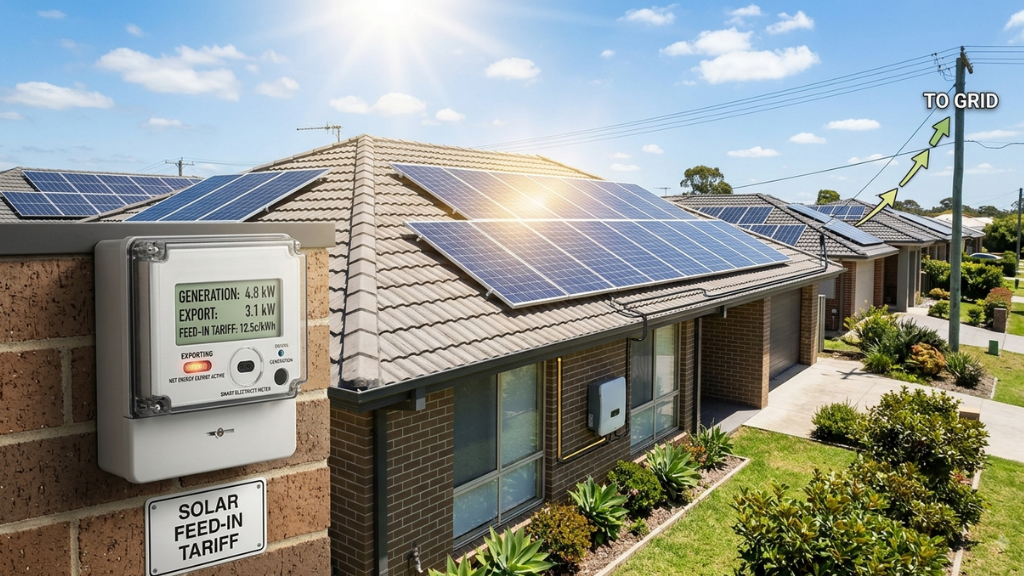
Installing solar panels is one of the most effective ways to cut your household power bills, but the electricity your system generates during the day isn’t always used up at home. When your panels produce more than your household needs, that surplus flows back into the grid, and your retailer pays you a credit for it, known as a solar feed-in tariff (FiT).
Feed-in rates have shifted significantly over the past few years, and 2026 brings another round of changes across all states. Finding a genuinely competitive rate means understanding how export credits are calculated, what conditions retailers attach to their best headline offers, and how to weigh export credits against the price you pay for grid power.
This guide breaks down how feed-in tariffs work in 2026, compares the rules state by state, and sets out practical ways to earn more from every kilowatt-hour your solar panels export.
What Is a Solar Feed-In Tariff?
A solar feed-in tariff is the rate, in cents per kilowatt-hour (c/kWh), that your retailer pays for the electricity your solar system exports rather than consumes on-site. Your bi-directional smart meter tracks exported kilowatt-hours, and the credit is applied to your bill each billing cycle.
How Does Feed-In Tariff Work in Queensland?
In Queensland, how your feed-in tariff is set depends entirely on where you live:
South East Queensland (Energex Network)
The retail market here is fully deregulated. There’s no state-mandated minimum, so retailers set their own export rates to compete for customers, using flat rates, capped tiered rates, and dynamic market-linked pricing.
Regional Queensland (Ergon Network)
Outside the south-east, the market is regulated. The Queensland Competition Authority (QCA) sets a mandatory rate each financial year based on the estimated wholesale value of exported solar. From 1 July 2026, that rate dropped to 6.006c/kWh, down from 8.66c/kWh the year before and 12.377c/kWh the year before that, reflecting falling daytime wholesale prices as more households install solar across the state.
Legacy Solar Bonus Scheme
Homeowners who installed solar before 10 July 2012 remain on a premium 44c/kWh export rate under the original Queensland Solar Bonus Scheme. This fixed rate remains available until 30 June 2028, provided no unapproved changes are made to the system.
Take-home message: Understanding how the QLD solar feed in tariff system varies by network helps you set realistic expectations for your bill credit and compare offers properly, rather than comparing a regional Ergon rate against a south-east Energex rate. It’s also worth checking your eligibility for the Solar Rebate QLD before making a new solar investment, as available incentives can affect the overall upfront cost of your system.
Which Energy Retailer Has the Best Solar Feed-In Tariff in QLD?
The right answer depends on your network, system size, and how much power you use during the day. When hunting for the best solar feed in tariff QLD residents can access, it helps to separate baseline standard offers from promotional or conditional rates.
For south-east Queensland households on the Energex network, 2026 offers generally fall into 3 tiers:
1. Standard Market Rates (3c–6c/kWh)
A flat rate paid on every kilowatt-hour exported, with no hardware purchase or program sign-up required. Most default and no-frills plans sit in this band.
2. Tiered or Capped Rates (8c–12c/kWh)
A higher rate paid up to a daily export limit (commonly the first 10–15 kWh per day), after which the rate drops sharply. Several mainstream retailers use this structure to advertise an eye-catching headline figure.
3. Retailer-Linked or VPP Rates (12c–22c/kWh)
The strongest rates on the market and typically where you’ll find the highest solar feed in tariff QLD retailers advertise, but usually tied to conditions such as joining a Virtual Power Plant (VPP) program, buying a battery or inverter through the retailer, or agreeing to time-of-export pricing.
For regional Queensland, there’s no shopping around on the export rate: Ergon Retail is the sole provider, and the QLD solar feed in tariff is fixed at the QCA’s mandated 6.006c/kWh for every eligible household.
What Are the Best Solar Feed-In Tariffs in QLD Right Now?
The table below outlines the minimum and maximum solar feed-in tariffs available across major energy retailers operating in Queensland:
| Provider | Plan Name | Est. Annual Cost | Solar Feed-In Tariff (c/kWh) | Usage Charge (c/kWh) | Supply Charge (c/day) |
| Amber Electric | Battery + Solar: Variable Wholesale Prices | $1,360 | 6.9c | 13.29 | 122.83 |
| CovaU | CovaU Basics Residential Single | $1,978 | 5.5c | 27.97 | 189.20 |
| Red Energy | Living Energy Solar Saver | $1,988 | 5c | 27.97 | 192.01 |
| Red Energy | Qantas Red Solar Saver | $1,988 | 5c | 27.97 | 192.01 |
| EnergyAustralia | Solar Max | $1,988 | 4c–8c (variable) | 27.97 | 192.01 |
Take-home message: Treat the best solar feed in tariff QLD numbers as a starting point, not the full picture, and always check the conditions before switching.
Is a Higher Solar Feed-In Tariff Always Better?
Not necessarily. Chasing the highest solar feed in tariff QLD retailers advertise can backfire if that plan quietly charges more elsewhere, through:
- a higher daily supply charge
- a higher peak usage rate, or
- an export cap that drops your rate to almost nothing once you exceed it
A Simple Scenario
Take two households, each with a 6.6kW Solar System exporting roughly 15kWh a day:
- Plan A (chasing the headline rate): Offers a 15c/kWh export rate, but carries a high daily supply charge of $1.45/day and a grid usage rate of 35c/kWh.
- Plan B (a more balanced offer): Offers an 8c/kWh export rate, but features a low daily supply charge of $0.98/day and a lower usage rate of 26c/kWh.
If that household draws a reasonable amount of power during the evening peak, Plan B’s lower charges can easily beat Plan A’s extra export credit over the quarter. Comparing supply charges, usage rates, and the export tariff together against your own bill is what separates the best solar electricity plans from ones that only look good in the ad.
What Is the Average Solar Feed-In Tariff by State in 2026?
Rates vary considerably depending on where you live and how your state regulates them. The table below sets out the typical range for each state and territory in 2026.
| State/Territory | Regulator | How It’s Set | Typical 2026 Range |
| QLD – Regional (Ergon) | QCA | Mandatory annual rate | 6.006c/kWh (from July 2026) |
| QLD – South East (Energex) | Deregulated | Market-set, no minimum | 3–22c/kWh depending on tier |
| NSW | IPART | Benchmark, not binding | 3.4–6.5c/kWh (from July 2026) |
| VIC | ESC | Deregulated since July 2025 | ~0–12c/kWh |
| SA | ESCOSA | Deregulated | ~5–6c/kWh average |
| WA | Synergy DEBS | Fixed scheme rate | 2.25c off-peak, up to 10c during 3–9pm |
| TAS | OTTER | Mandatory minimum | 8.782c/kWh (to 30 June 2026) |
| ACT | ICRC | Benchmark | Among the higher rates nationally |
| NT | Regulated | Fixed rate | Around 8.3c/kWh |
A few patterns stand out here. Regional Queensland and Tasmania offer the most certainty, since a regulator guarantees a floor rate. New South Wales and South Australia are the least predictable, with rates set purely by market competition. And Western Australia runs its own separate scheme through Synergy, outside the National Electricity Market that governs the eastern states.
How Can I Maximise My Solar Feed-In Tariff Earnings in 2026?
Locking in a strong rate helps, but relying on grid exports alone is no longer the best way to get value from your system. Grid electricity typically costs 28c–36c/kWh to buy, while export credits sit at 3c–10c/kWh for most households, which means using your own solar power is worth roughly 3 to 4 times more than exporting it.
Here are 5 proven strategies to squeeze maximum value from your solar investment:
1. Shift Heavy Appliance Use to Daytime Hours
Run your washing machine, dishwasher, pool pump, and hot water system between 10 am and 3 pm when your panels are producing the most. Every kilowatt-hour you use directly is a kilowatt-hour you don’t buy back at 30c-plus.
2. Match Your System Size to Current Household Demand
If your household has grown, or you’ve added an EV or a heat pump, your original system size might no longer cover daytime demand. Upgrading your panel capacity keeps more of your generation working for you before anything gets exported.
3. Consider Adding Battery Storage
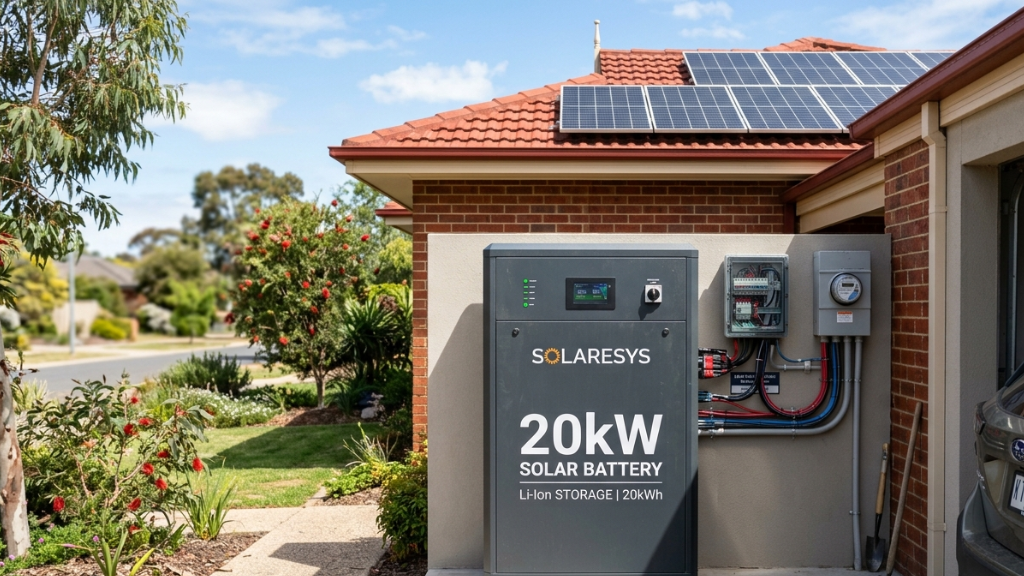
A battery lets you store midday surplus and use it during the evening peak rather than exporting it for a few cents. For households with higher energy consumption, options such as a 10kW Solar Battery can provide additional storage capacity to help shift more solar energy into the evening. Larger homes or properties with substantially higher electricity demand may also consider a 20kW Solar Battery where the additional storage capacity is appropriate for their energy usage and solar generation.
4. Review Your Plan at Least Once a Year
Retailers adjust their tariff structures often. A plan that looked competitive a year ago may have quietly reduced its export rate or increased its supply charge since, so it pays to compare solar plans annually rather than setting and forgetting.
5. Confirm Your Export Limits and System Approval
Check that your inverter is correctly configured and approved by your local network provider, since some areas apply export limits to manage grid capacity. A quick check with your installer or retailer ensures you’re capturing every credit you’re entitled to.
Ready to Get the Most From Your Solar Investment?
Feed-in tariffs keep evolving as more homes go solar and the grid adapts; that’s exactly why it pays to have a local team in your corner who actually understands how these changes affect your household.
At SPS Energy, we’ve spent more than 30 years designing and installing solar systems across Queensland, from residential rooftop setups to more complex rural and off-grid installations. We can help you size a system that maximises self-consumption, choose the right batteries for solar panels, and point you toward electricity plans that genuinely work in your favour.
If you’re ready to get more from your solar panels in 2026, get in touch with our team today for tailored advice on your home or business.