Table of Contents
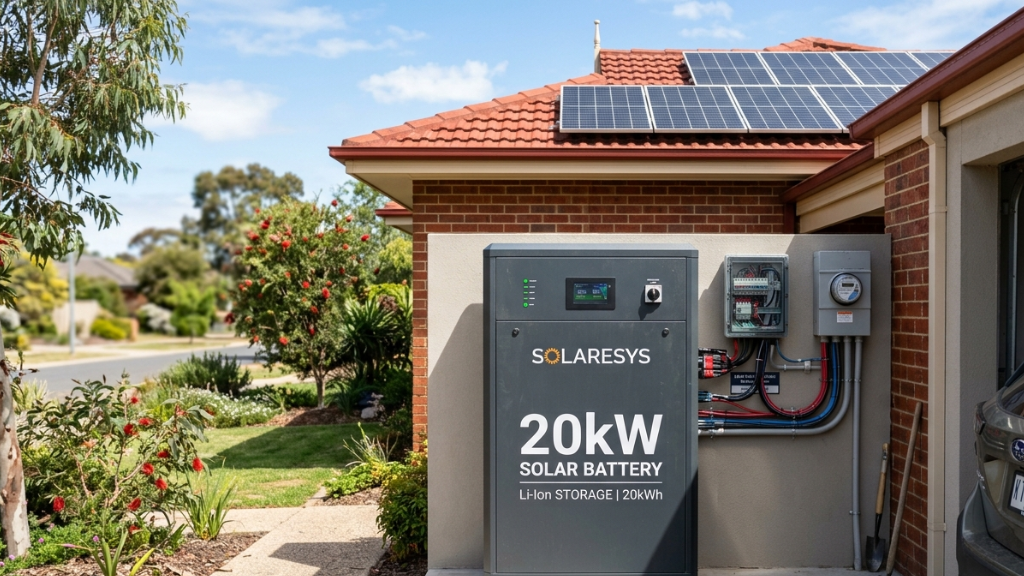
A 20kW solar battery price in Australia typically ranges between $15,000 and $25,000 for a fully installed premium unit before national incentives. However, with the application of federal and state rebates, the 20kW solar battery price after rebate drops significantly, bringing your out-of-pocket investment down to an estimated $10,500 to $20,500, depending on your location, chosen brand, and installation complexity.
This guide explains current pricing, rebates, running costs, expected savings, battery lifespan, and whether a 20kW battery is the right fit for your home or business in 2026.
Why Australians Are Choosing 20kW Battery Storage?
Electricity prices remain one of the biggest household expenses in Australia. While solar panels reduce daytime energy bills, many homes still consume electricity during the evening when solar production stops.
A larger battery lets you store surplus solar energy during the day and use it after sunset instead of buying expensive grid electricity. Investing in a quality Solar Battery Storage system helps maximise self-consumption, reduce reliance on the grid, and improve long-term energy savings.
A 20kW battery is particularly suitable for:
- Large family homes
- Homes with electric vehicles (EVs)
- All-electric households
- Properties using ducted air conditioning
- Home offices with high daytime consumption
- Small businesses wanting to reduce operating costs
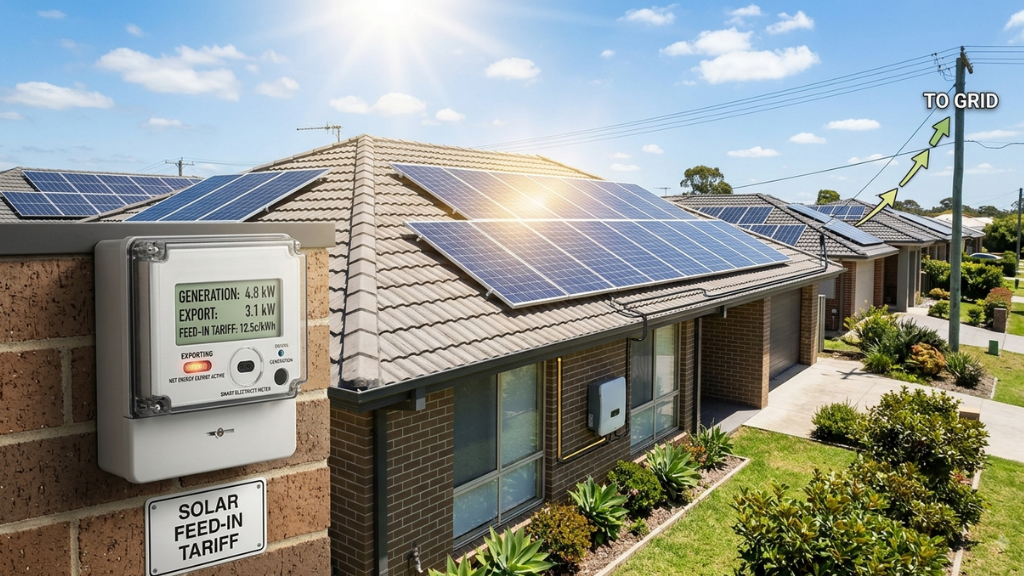
Instead of exporting excess solar energy for a relatively low feed-in tariff, you can keep more of the electricity you generate and use it yourself.
20kW Solar Battery Price in Australia
The 20kW solar battery price in Australia depends on several factors, including battery chemistry, usable storage capacity, installation requirements, inverter compatibility, warranty, and the manufacturer.
As a general guide in 2026:
| Battery System Type | Typical Installed Cost (Before Rebates) |
| Entry-level 20kW system | $15,000 – $18,000 |
| Mid-range premium system | $18,000 – $22,000 |
| High-end battery with advanced backup features | $22,000 – $25,000+ |
These prices generally include:
- Battery modules
- Integrated battery management system (BMS)
- Electrical labour
- System commissioning
- Manufacturer warranties
Costs can increase if your property requires:
- Switchboard upgrades
- Three-phase power integration
- Dedicated backup circuit rewiring
- Additional hybrid inverter installation
- Long cable runs
What affects the cost of a 20kW battery?
Several factors influence the final installation price.
Battery brand and technology
Premium manufacturers generally charge more but often provide:
- Longer warranties
- Better efficiency
- Advanced monitoring
- Improved backup capability
- Higher cycle life
Existing solar system
If you already have a compatible solar system, adding a battery is generally less expensive than installing both a new solar system and a battery from scratch.
However, some older solar systems may require inverter upgrades or additional electrical work.
Installation complexity
Homes with difficult roof access, older switchboards, or lengthy cable runs may incur higher installation costs.
Backup power capability
If you want the battery to continue powering essential appliances during a blackout, additional hardware is often required, increasing the overall investment.
Is there a rebate for 20kW batteries in Australia?
Yes. One of the biggest developments for property owners in 2026 is the introduction of the federal government’s Cheaper Home Batteries Program. Homeowners can further understand available incentives by exploring the latest Solar Battery Rebate programs, which explain eligibility requirements, federal incentives, and state-based support available across Australia.
The rebate follows a tiered model based on the capacity you install:
- 0 to 14 kW: Receives 100% of the federal STC incentive factor (valued at approximately $252 per usable kW).
- 14 to 28 kW: Receives a tapered 60% of the STC factor (valued at approximately $151 per usable kW).
For a 20kW battery system, this federal framework provides an upfront point-of-sale discount of roughly $4,434 ($3,528 for the first 14kW + $906 for the remaining 6kW).
When combined with interest-free battery loans, Virtual P ower Plant (VPP) signup bonuses, or specific regional grants, the 20kW solar battery price after rebate becomes a far more accessible, high-yielding investment.
Note: This is an estimate only. The final rebate depends on the battery’s eligible usable capacity, the STC value at the time of installation, and the installer meeting the program’s eligibility requirements.
Is a 20kW battery worth the investment?
The answer is yes for households with high electricity consumption.
A larger battery allows you to:
- Store more excess solar generation
- Buy less electricity from the grid
- Increase energy independence
- Protect against rising electricity prices
- Improve the return on your solar investment
The value is greatest when:
- You consume most of your stored energy each evening.
- You own an electric vehicle.
- Your feed-in tariff is low.
- Your household uses electricity throughout the night.
Rather than exporting solar power for only a few cents per kilowatt-hour, you use your own stored electricity when retail electricity prices are highest.
How much can a 20kW battery save each year?
Many larger Australian homes can reduce annual electricity costs by over $2,000 when a properly sized battery is paired with an appropriately sized solar system.
However, annual savings depend on several variables:
- Household electricity usage
- Solar system size
- Local electricity tariffs
- Feed-in tariff rates
- Weather conditions
- Battery charging habits
Households with electric vehicles or high overnight electricity use may save even more.
How long does a 20kW battery last?
A common question homeowners ask is, “How long does a 20kW battery last?”
There are two ways to answer this.
1. Daily Runtime
How long the stored energy powers your home depends entirely on your real-time electricity usage.
For example:
| Average Household Consumption | Approximate Battery Runtime |
| 1 kW continuous usage | Around 20 hours |
| 2 kW continuous usage | Around 10 hours |
| 4 kW continuous usage | Around 5 hours |
If you mainly use lighting, refrigeration, internet equipment, and televisions overnight, a fully charged 20kW battery can comfortably last until the sun rises the next morning.
2. Battery Lifespan
Modern lithium batteries generally last:
- 10–15 years
- Around 6,000–10,000 charge cycles
- Supported by warranties of approximately 10 years
Proper installation, moderate temperatures, and regular cycling all contribute to a longer battery life.
How many solar panels do I need for a 20kW system?
The exact number of panels required for a 20kW solar system depends on the specific panel wattage you select:
| Panel Size (Watts) | Approximate Total Panels Needed | Estimated Roof Space Required |
| 440W Panels | ~46 panels | 85 – 95 m² |
| 450W Panels | ~45 panels | 82 – 92 m² |
| 500W Panels | ~40 panels | 80 – 90 m² |
The actual design also depends on:
- Roof orientation
- Roof pitch
- Shade
- Available installation area
- Local climate
Can a 20kW battery run an entire house?
Yes, but it depends on how much electricity your household uses.
Many Australian residential properties consume between 15kWh and 25kWh of electricity per day.
If your overnight consumption falls within the battery’s usable capacity, a fully charged 20kW battery can often power the home throughout the evening and overnight.
However, running multiple high-demand appliances simultaneously, such as AC, electric ovens, pool pumps, and EV chargers, will drain the stored energy at an accelerated rate.
Should you install a battery with a new solar system?
If you’re already investing in solar, installing battery storage at the same time often provides better long-term value.
Benefits include:
- One installation process
- Better system compatibility
- Lower future installation costs
- Simplified electrical upgrades
- Easier integration with a compatible Hybrid Solar Inverter
Planning both systems together also allows your installer to correctly size the solar array and battery based on your energy usage.
How do you choose the right 20kW battery?
Not every battery performs the same.
When comparing options, consider:
- Usable battery capacity
- Round-trip efficiency
- Warranty period
- Cycle life
- Backup power capability
- Monitoring software
- Manufacturer reputation
- Local installation and after-sales support
It’s also important to ensure your battery is compatible with one of the Best Solar Inverters, as inverter quality directly affects system efficiency, monitoring capabilities, and long-term performance.
The cheapest option isn’t always the best value over the battery’s lifespan.
A quality system with reliable support may deliver greater long-term savings and peace of mind.
Is a 20kW battery the right size for your home?
A 20kW battery isn’t necessary for every household.
It is generally best suited to homes that:
- Generate significant excess solar power
- Have a high evening electricity demand
- Own one or more electric vehicles
- Want greater energy independence
- Experience frequent power outages
Smaller households may achieve better value with a lower-capacity battery, while larger homes can often maximise savings with 20kW of storage.
As experienced installers, we always assess your electricity bills, solar production, and future energy needs before recommending a battery size.
Ready to Find the Right Solar Battery for Your Property?
If you’re considering adding battery storage or installing a complete solar-and-battery system, speak with the team at SPS Energy. We’ll assess your property’s energy requirements, explain the latest rebates and incentives, and recommend a solution designed to maximise your long-term savings.
To get started, contact us and let our experts help you make the most of your solar investment.
Frequently Asked Questions
A fully installed 20kW solar battery system in Australia typically costs between $15,000 and $25,000 before incentives. After applying eligible federal and state rebates, the out-of-pocket cost can range from approximately $10,500 to $20,500, depending on the battery brand, installation requirements, and your location.
Yes. Eligible homeowners and small businesses may benefit from the Australian Government's Cheaper Home Batteries Program, along with available state-based incentives. The total rebate depends on your battery's usable capacity, installation date, and eligibility requirements, helping reduce the upfront cost of installing battery storage.
A 20kW solar battery can be a worthwhile investment if your household has high electricity usage, a large solar system, or electric vehicles. By storing excess solar energy for evening use, you can reduce grid electricity purchases, increase energy independence, and improve the long-term return on your solar investment.
Annual savings vary depending on your electricity consumption, solar generation, and local electricity tariffs. Many larger Australian households can save more than $2,000 per year by using stored solar energy instead of buying electricity from the grid during peak pricing periods.
The runtime depends on how much electricity your home uses. A fully charged 20kW battery can typically provide around 20 hours at 1kW, 10 hours at 2kW, or 5 hours at 4kW of continuous electricity usage. Many households can comfortably power essential appliances overnight.
Most modern lithium solar batteries have an expected lifespan of 10 to 15 years and are designed to deliver between 6,000 and 10,000 charge cycles. Many premium manufacturers also provide warranties of around 10 years, depending on the battery model and usage conditions.
Yes, a 20kW battery can power many Australian homes overnight, provided your electricity consumption stays within the battery's usable capacity. Running multiple high-demand appliances such as ducted air conditioning, electric ovens, EV chargers, and pool pumps simultaneously will reduce the available runtime.
The number of solar panels required depends on their wattage and your daily energy usage. For example, a system using 440W panels typically requires around 46 panels, while 500W panels require approximately 40 panels. Roof orientation, shading, and local climate also influence system design.
In many cases, yes. If your existing solar system is compatible, a battery can often be added without replacing the entire system. However, some older installations may require an inverter upgrade or additional electrical work to ensure safe and efficient operation.
A 20kW battery is generally best paired with a larger solar system capable of generating enough excess electricity to recharge the battery each day. The ideal system size depends on your household's daily energy consumption, roof space, and seasonal solar production.