Table of Contents
The average 10kW solar battery price in Australia ranges from $10,000 to $18,000 fully installed in 2025, depending on the brand, inverter type, installation complexity, and available government rebates. This cost typically includes the battery unit, hybrid inverter, battery management system and professional installation. A 10kW solar battery can store enough energy to cover most evening and nighttime household usage, making it a strong option for homeowners wanting lower bills and greater energy independence. However, factors such as switchboard upgrades, backup power configuration, and rebate eligibility can influence your final price, so understanding the full breakdown is essential before investing.
What Is a 10kW Solar Battery?
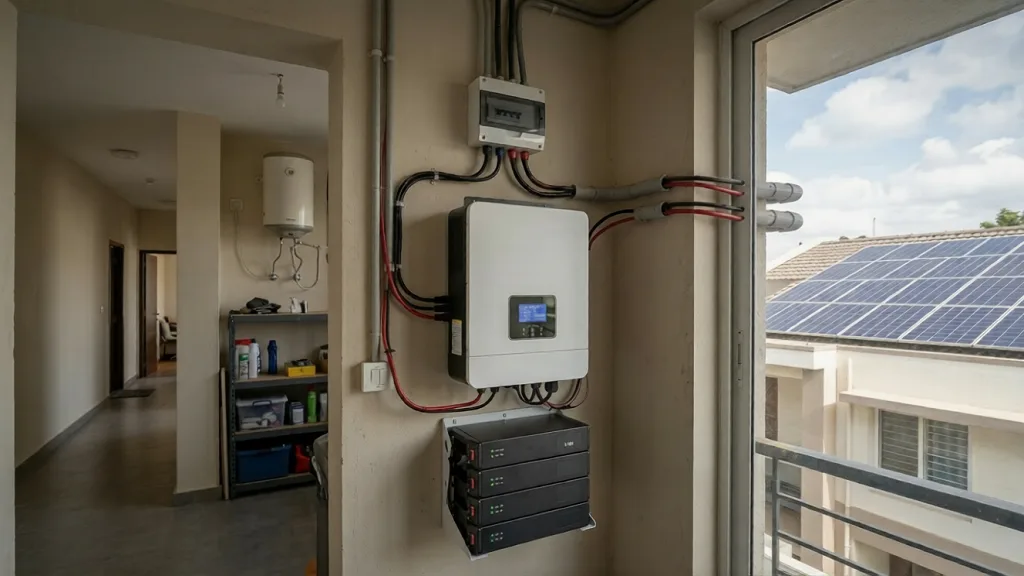
A 10kW solar battery is an energy storage system capable of holding approximately 10 kilowatt-hours of electricity generated by your solar panels. Think of it as a large rechargeable unit that captures excess solar energy during sunny days and releases it when you need it most—during evening peak hours or when the sun isn’t shining.
For context, the average Australian household consumes between 15 and 25 kilowatt-hours daily. This means a 10kW battery can cover a substantial portion of your evening and nighttime energy needs, dramatically reducing your reliance on grid electricity.
Understanding the 10kW Solar Battery Price Australia
The cost for a 10kW solar battery system typically ranges from $10,000 to $18,000, with variations based on location, brand, and installation requirements. The best 10kW solar battery price Australia offers depends on several critical factors we’ll explore below.
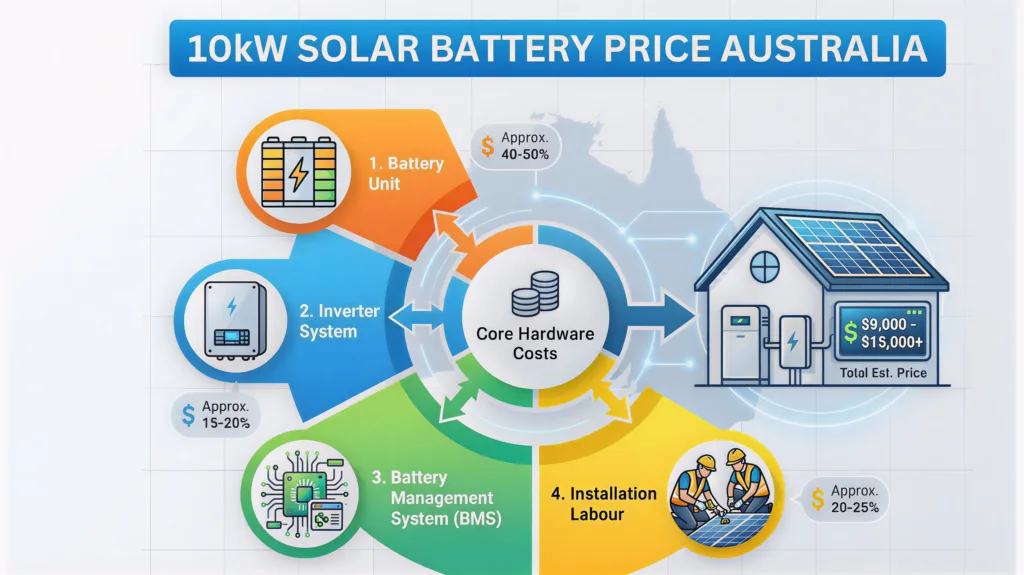
Core Hardware Costs
Battery Unit: The battery itself represents the largest expense, typically accounting for 60-70% of total costs. Battery chemistry significantly affects pricing, with lithium-ion options being more efficient and longer-lasting than lead-acid alternatives.
Inverter System: If you don’t already have a compatible inverter, you’ll need one to manage the energy flow between your solar panels, battery, and home. A quality solar inverter adds approximately $2,000 to $3,500 to your installation.
Battery Management System: Modern solar batteries include sophisticated monitoring systems that optimise charging cycles, track performance, and alert you to potential issues. These smart features contribute to the overall price but provide invaluable peace of mind.
Installation Labour: Professional installation typically costs between $1,500 and $3,500, depending on your home’s electrical configuration, accessibility, and whether switchboard upgrades are required.
The Complete 10kW Solar System with Battery Price
If you’re starting from scratch or upgrading an existing system, understanding the 10kW solar system with battery price helps you budget accurately. A complete 10kW solar system paired with battery storage typically ranges from $14,000 to $25,000, representing a comprehensive energy solution.
This complete package generally includes:
- 23-30 high-efficiency solar panels
- Quality mounting hardware and racking
- Hybrid or battery-compatible inverter
- 10kW battery storage system
- Professional installation and commissioning
- Monitoring system and warranty coverage
Many homeowners pairing a 10kW battery with a 6.6kW solar system see strong savings due to the system’s ability to maximise daytime generation while ensuring consistent battery charging.
Hidden Costs Most People Overlook
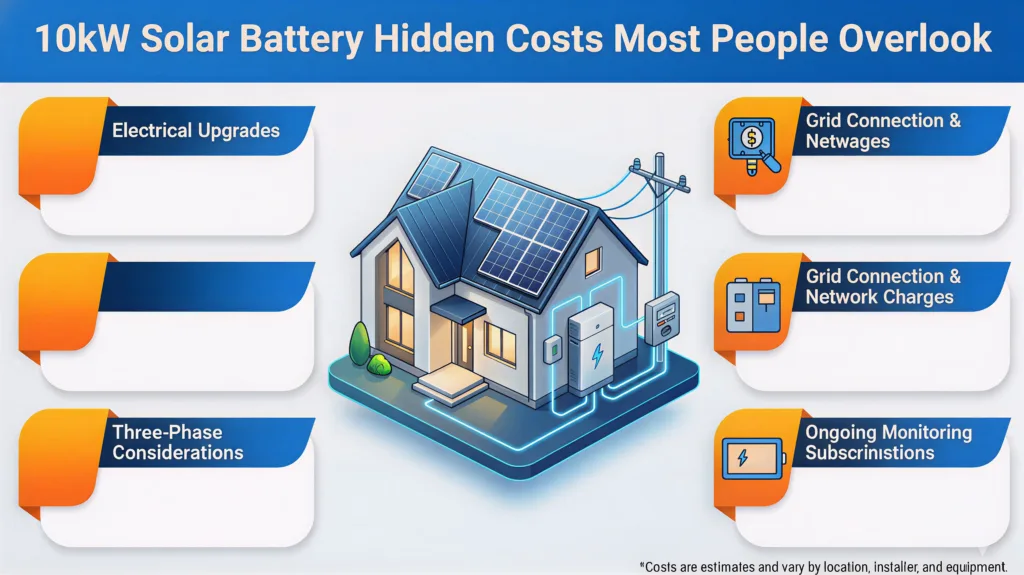
Electrical Upgrades
Older homes may require switchboard upgrades to safely accommodate battery systems. This can add $800 to $2,000 to your project cost but ensures compliance with Australian electrical standards.
Backup Power Configuration
Want your battery to keep essential appliances running during blackouts? Backup power capability often requires additional hardware such as a backup gateway or critical loads panel, which adds $800 to $1,500 to installation costs.
Three-Phase Considerations
If your home operates on a three-phase power supply, you’ll face slightly higher inverter and installation costs—typically an additional $900 to $1,500 compared to single-phase installations.
Ongoing Monitoring Subscriptions
Some premium battery brands charge annual fees for advanced monitoring features or cloud-based analytics. While often optional, these services provide valuable insights into system performance.
Battery Capacity Economics
Here’s an interesting cost dynamic most installers won’t tell you upfront: per-kilowatt-hour costs decrease as battery capacity increases. Smaller 5kWh batteries may cost around $1,600 per kWh, while larger systems can drop to under $1,000 per kWh.
This economy of scale means that stepping up to a 10kW system often provides better value than purchasing a smaller battery, his is especially true if you plan to upgrade to commercial solar panels in future or introduce higher energy loads such as an EV or pool heater.
Government Rebates That Slash Costs
The Federal Government Solar Battery Rebate, starting July 2025, covers approximately 30% of installed battery costs, capped at $370/kWh. For a 10kW battery, this could save you up to $3,700.
Federal Cheaper Home Batteries Program
Starting July 2025, this program covers approximately 30% of installed battery costs, capped at $370 per kWh for systems up to 50kWh. For a 10kW battery, this translates to potential savings of $3,700—a substantial reduction in upfront costs.
State-Specific Incentives
Victoria: Eligible homeowners can access interest-free loans up to $8,800, plus battery rebates up to $2,950.
New South Wales: Through the Peak Demand Reduction Scheme, residents may receive upfront discounts between $1,500 and $2,000 for 10kW systems, with additional credits available through Virtual Power Plant participation.
South Australia: Although the Home Battery Scheme has closed to new applicants, competitive market pricing in Adelaide keeps costs among the most affordable in Australia.
Queensland: Although direct battery rebates aren’t currently available, low-interest green loans and the federal program still provide meaningful financial support.
Virtual Power Plant Benefits
Many Australian energy retailers offer sign-up bonuses between $250 and $400 for joining Virtual Power Plant programs. These networks allow your battery to feed excess energy back to the grid during peak demand periods, earning you ongoing credits while supporting grid stability.
Choosing the Right Solar Batteries
Not all solar batteries are created equal. The best 10kW solar battery price Australia balances cost with performance, warranty coverage, and local support.
Lithium Iron Phosphate (LFP): The current gold standard for home energy storage, LFP batteries offer excellent safety profiles, long lifespans (typically 10-15 years), and maintain performance across thousands of charge cycles.
Premium Brands: Names like Tesla Powerwall, LG Chem RESU, and Sonnen command higher prices but deliver proven reliability, comprehensive warranties, and excellent customer support.
Value Options: Mid-tier brands, including Sungrow, BYD, and Alpha ESS, provide solid performance at more accessible price points, making quality battery storage available to more Australian households.
Installation Considerations That Affect Price
Location Accessibility: Batteries installed in easily accessible outdoor areas typically cost less than units requiring indoor mounting or navigation through tight spaces.
Distance from Electrical Panel: The further your battery sits from your home’s electrical panel, the more cable and conduit you’ll need, incrementally increasing installation costs.
Roof Condition and Panel Orientation: If you’re adding batteries to an existing solar system, your installer will assess whether current panel positioning and roof infrastructure can support the additional equipment weight.
Is a 10kW Battery Right for Your Home?
Before committing to the investment, consider these factors:
Energy Consumption Patterns: Review your electricity bills to understand evening and nighttime usage. If you’re consuming 10-15kWh after sunset, a 10kW battery provides excellent coverage.
Solar System Size: A 10kW battery pairs ideally with solar arrays between 6.6kW and 13kW, ensuring you generate sufficient daytime energy to fully charge your battery.
Future Plans: Planning to add an electric vehicle, pool, or home office? Factor these increased energy demands into your battery sizing decision.
Roof Suitability: North-facing roofs with minimal shading and 15-30 degree pitch offer optimal solar generation, maximising the value of your battery investment.
Real-World Payback Timeline
With average Australian electricity rates between $0.25 and $0.35 per kilowatt-hour, a properly sized battery system typically pays for itself within 6 to 10 years. However, this timeline improves dramatically when you:
- Maximise self-consumption rather than exporting to the grid
- Take advantage of all available rebates and incentives
- Participate in Virtual Power Plant programs
- Choose batteries with minimal degradation over time
Take the Next Step Toward Energy Independence
Ready to explore how a 10kW battery system could transform your energy management? Contact SPS Energy today for a comprehensive assessment and transparent pricing. Our experienced team will walk you through hardware options, available rebates, and realistic payback expectations—giving you all the information needed to make a confident decision.