Table of Contents
Electrical Contractors Insurance is a specialised business insurance package that protects electricians and contracting businesses from financial loss caused by property damage, workplace injuries, legal claims, tool theft, and project risks. It typically includes public liability, professional indemnity, workers compensation, and equipment cover.
If you work in the electrical industry, the risks are not theoretical—they are part of your daily operations. From live electrical systems to complex installations and compliance obligations, a single incident can result in significant financial and legal consequences.
This guide explains exactly what Electrical Contractors Insurance covers, why it’s essential in Australia, and how to choose the right policy for long-term business protection.
What Is Electrical Contractors Insurance?
Electrical Contractors Insurance is designed to protect both your business operations and your legal liability when something goes wrong on-site or as a result of your work.
Beyond financial protection, it also plays a critical role in:
- Maintaining your professional reputation
- Meeting client and contractual requirements
- Ensuring compliance with Australian safety standards
In a highly regulated industry guided by authorities like Safe Work Australia, having appropriate insurance is not just best practice—it’s often expected.
Why Electrical Contractors Need Insurance in Australia
Electrical contracting is classified as high-risk work, combining physical hazards with legal accountability.
Key reasons insurance is essential:
1. High-Risk Work Environment
Electrical work involves:
- Live wires and high voltage systems
- Fire risks from faulty installations
- Working at heights or confined spaces
Even experienced contractors face exposure to unpredictable incidents.
2. Legal and Financial Liability
If your work causes:
- Property damage
- Injury to a third party
- System failure leading to loss
You may face legal claims that can cost tens or hundreds of thousands of dollars.
3. Compliance and Contract Requirements
Many clients including commercial builders and government projects—require:
- Proof of public liability insurance
- Minimum coverage thresholds (often $5M–$20M)
Regulatory bodies such as Australian Government and workplace frameworks influenced by Fair Work Ombudsman reinforce compliance obligations.
4. Business Continuity
Without insurance, a single major claim could:
- Disrupt operations
- Drain cash flow
- Force business closure
Insurance acts as a financial safety net that protects your long-term viability.
What Does Electrical Contractors Insurance Cover?
A comprehensive policy combines multiple types of protection:
1. Public Liability Insurance
The most critical cover for contractors.
Covers:
- Injury to third parties
- Damage to client property
Example: A wiring fault causes a fire in a client’s home—this policy covers legal and repair costs.
2. Professional Indemnity Insurance
Protects against errors in advice, design, or technical planning.
Covers:
- Design faults
- Incorrect recommendations
- Financial loss due to professional mistakes
Essential for contractors offering design-build or consulting services.
3. Tools & Equipment Insurance
Your tools are revenue-generating assets.
Covers:
- Theft (including from vehicles)
- Accidental damage
- Loss on-site or in transit
Without this, replacing equipment can significantly impact cash flow.
4. Workers Compensation Insurance
Mandatory if you employ staff in Australia.
Covers:
- Medical expenses
- Lost wages
- Rehabilitation costs
Also protects your business from employee liability claims.
5. Commercial Vehicle Insurance
If your business relies on vehicles:
Covers:
- Road accidents
- Theft or damage
- Third-party liability
6. Contract Works Insurance
Protects projects while they are still in progress.
Covers:
- Damage to incomplete installations
- Theft or vandalism
- Weather-related losses
Critical for large or ongoing projects.
What Is NOT Covered?
Even comprehensive policies have exclusions.
Typical exclusions include:
- Intentional damage or illegal activity
- Wear and tear of tools
- Work performed without proper licensing
- Faulty workmanship (in some cases)
Important:
While faulty workmanship may not be covered, resulting damage often is—always review policy wording carefully.
Key Benefits of Electrical Contractors Insurance
Financial Protection
Claims in the construction and electrical sector can exceed $50,000+ per incident, depending on severity.
Increased Client Trust
Being insured signals:
- Professionalism
- Reliability
- Risk awareness
This directly impacts your ability to win contracts.
Legal & Regulatory Compliance
Many projects require proof of insurance before work begins.
Peace of Mind
You can focus on delivering quality work instead of managing worst-case scenarios.
How Much Does Electrical Contractors Insurance Cost?
There is no fixed price—premiums vary based on risk profile.
Key cost factors:
- Business size and annual revenue
- Type of work (residential vs commercial vs industrial)
- Number of employees
- Claims history
- Coverage limits selected
Typical Insight:
- Sole traders → lower premiums
- Large contractors → higher premiums due to risk exposure
Insurance should be viewed as a risk management investment, not just an expense.
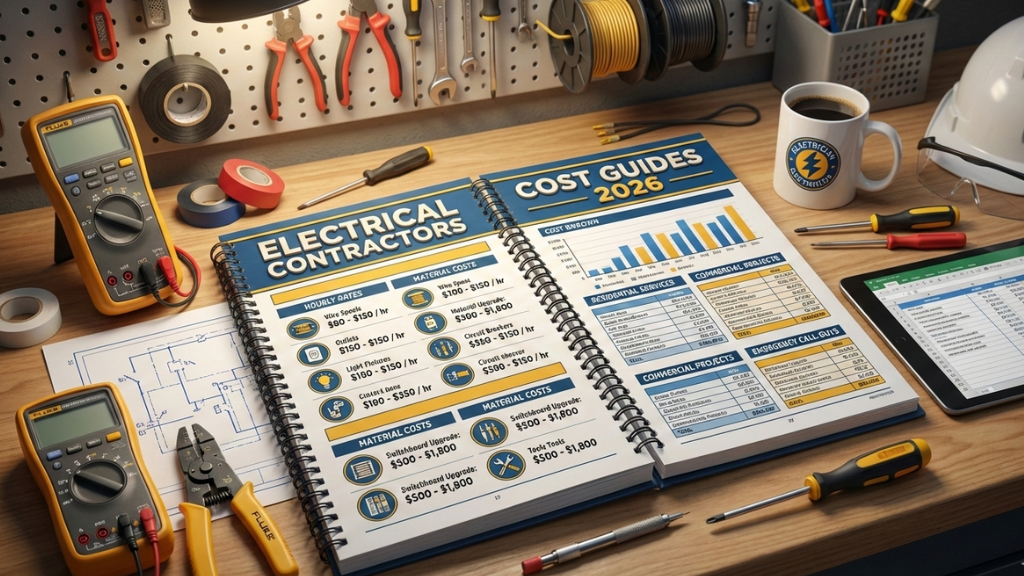
explore our detailed guide on Electrical Contractors Cost.
How to Choose the Right Insurance Policy
1. Assess Your Risk Profile
Consider:
- Job types
- Work environments
- Exposure to hazards
2. Compare Coverage (Not Just Price)
Evaluate:
- Coverage limits
- Exclusions
- Claims process efficiency
3. Work With a Specialist Broker
A broker with electrical industry experience can:
- Tailor policies
- Identify coverage gaps
- Ensure compliance
4. Review Your Policy Regularly
As your business grows:
- Risk exposure increases
- Coverage needs change
Annual reviews are essential.
Electrical Contractor vs Electrician: Does Insurance Differ?
Although often confused, these roles carry different risk levels:
- Electrician: Performs installations, maintenance, repairs
- Electrical Contractor: Runs a business, manages projects, employs staff
Because contractors take on:
- Greater legal responsibility
- Project management risks
For a deeper understanding, explore Electrical Contractor vs Electrician to see how roles and responsibilities differ.
Ready to get your electrical work done right?
Trust experienced electrical contractor in Eumundi at SPS Energy for safe, compliant, and high-quality results. From installations to solar solutions, we’ve got you covered. Contact our team today, and let’s get your project started with confidence.