Table of Contents
Watching your electricity bill arrive each quarter can feel like opening a mystery box. Will it be higher than last time? Are you paying more than you should? With energy prices on the rise across Australia, understanding and controlling your power costs has never been more important.
An electricity bill calculator is your secret weapon for taking charge of your energy expenses. This simple tool helps you estimate your monthly power costs in just minutes, giving you the insight you need to make smarter decisions about your energy usage.
What Is an Electricity Bill Calculator?
An electricity bill calculator is a free online tool that estimates how much you’ll pay for electricity based on your household’s energy consumption. Instead of waiting for bill shock when your quarterly statement arrives, you can get ahead by calculating your expected costs and identifying opportunities to save.
These calculators work by taking a few key pieces of information, such as your appliance usage, daily electricity consumption in kilowatt-hours (kWh), and your current electricity rate. Within seconds, you’ll have a clear picture of your estimated electricity bill.
Understanding Your Average Electricity Bill
Before diving into calculations, it’s helpful to know what’s considered normal. The average electricity bill varies significantly across Australia, depending on where you live and how many people share your home.
The average electricity bill for 2 person household ranges from approximately $1,500 to $2,100 annually, though this can vary by state. In Queensland, residents typically face some of the highest electricity costs in the country, with average annual bills ranging from $1,230 to $2,143.
A normal electric bill for a household depends on several factors, including household size, appliance efficiency, seasonal usage, and your specific energy plan. Comparing your bill to these averages helps you identify whether you’re overpaying or if your usage is within expected ranges.
The Queensland Electricity Bill Shock Reality
If you’re in Queensland, you’ve likely experienced the Queensland electricity bill shock that’s been making headlines. With electricity prices recently increased by 3.8%, many households are seeing their quarterly bills jump by around $72 per year.
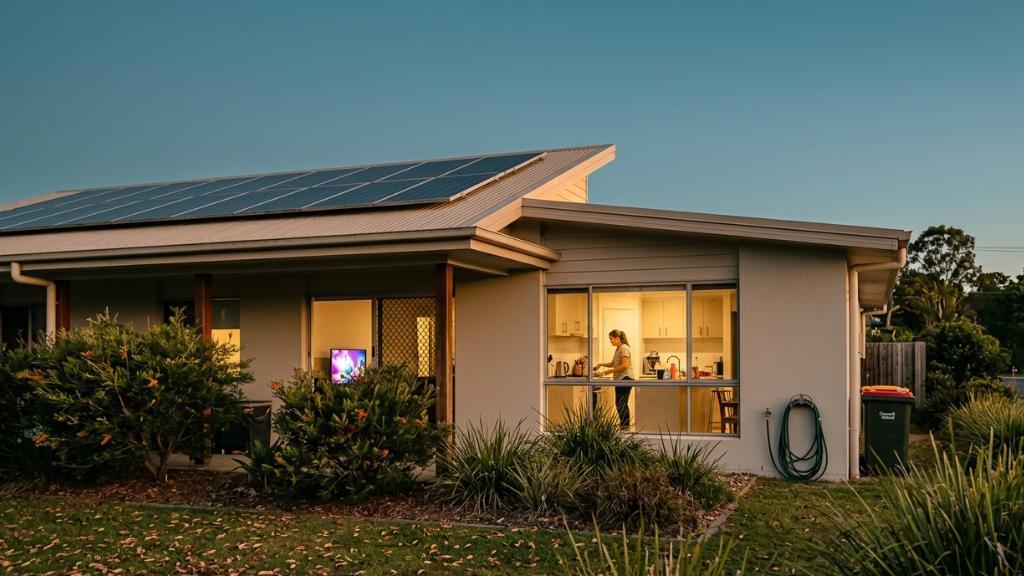
The shock is particularly pronounced for residents who’ve been relying on Solar Panel Incentives. When these subsidies decrease or end, the true cost of electricity becomes apparent. Recent data shows that nearly half of Queenslanders have experienced electricity bill shock, with many caught off guard by sudden price increases.
Understanding your consumption patterns through an electricity bill calculator can help you prepare for these increases and take proactive steps to manage costs before the next bill arrives.
How to Use an Electricity Bill Calculator Effectively
Getting the most accurate results from an electricity bill calculator requires knowing a few key details about your energy usage. Here’s what you’ll typically need:
Power Draw Information
Check the wattage of your appliances, usually found on compliance plates or in the product manual. Common appliances range from 50W for LED lights to 2,000W or more for air conditioners.
Your Electricity Tariff
Look at your current bill to find your rate per kWh. In Australia, this typically ranges from 25 to 35 cents per kWh, though it varies by state and retailer.
Usage Patterns
Estimate how many hours per day you use each appliance, how many days per week, and for how many weeks throughout the year. Be honest with these estimates for accurate results.
Daily Supply Charge: Don’t forget this fixed daily cost that appears on every bill, typically between 90 cents and $1.20 per day, depending on your location and retailer.
Electricity Bill Calculator
Estimate your monthly electricity cost based on usage, rate, and supply charge.
The Electricity Bill Calculation Formula
Understanding the calculation behind your electricity bill empowers you to identify exactly where your money goes. The formula is straightforward:
Basic Formula
Daily Energy Consumption (kWh) = (Appliance Wattage ÷ 1000) × Hours Used Per Day
Complete Bill Calculation
Total Electricity Cost = (Total kWh × Usage Rate) + (Daily Supply Charge × Number of Days)
Let’s break this down with a real-world example of a typical household air conditioner:
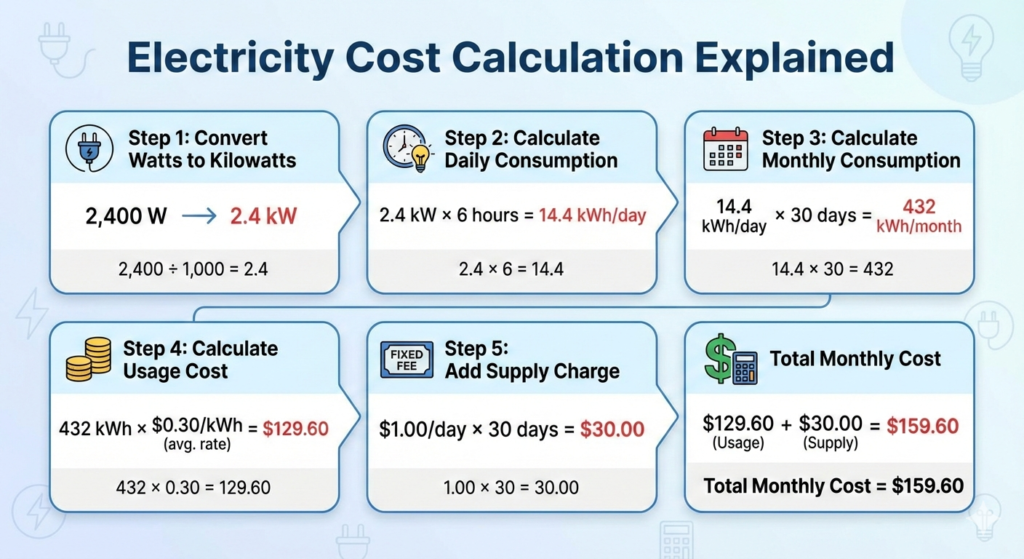
Example: Calculating Air Conditioner Running Costs
Say you have a 2,400-watt air conditioner that you run for 6 hours per day during the summer months.
Step 1: Convert watts to kilowatts
2,400W ÷ 1,000 = 2.4kW
Step 2: Calculate daily consumption
2.4kW × 6 hours = 14.4 kWh per day
Step 3: Calculate monthly consumption
14.4 kWh × 30 days = 432 kWh per month
Step 4: Calculate usage cost
432 kWh × $0.30 (average rate) = $129.60
Step 5: Add supply charge
$1.00 per day × 30 days = $30.00
Total Monthly Cost = $129.60 + $30.00 = $159.60
This means running your air conditioner for just 6 hours daily costs nearly $160 per month, or about $480 for a three-month summer quarter.
Now imagine adding your refrigerator, washing machine, hot water system, lighting, and entertainment devices. The costs add up quickly.
By using this formula with an electricity bill calculator, you can input each of your major appliances and get a complete picture of where your money is going. This visibility helps you prioritise which appliances to use more efficiently or replace with energy-efficient alternatives.
What Drives Your Electricity Bill Higher?
Understanding the components of your electricity bill helps you know where to focus your cost-cutting efforts.
Two Main Bill Components
Your bill consists of two main charges: the usage charge (what you pay for actual electricity consumed, measured in kWh) and the supply charge (the fixed daily cost to maintain your connection to the grid).
The Biggest Energy Consumers in Your Home
Heating and cooling account for roughly 27% to 40% of household energy consumption, making them the biggest contributors to high bills. Hot water systems add another 29% on average, while appliances and lighting make up the remainder.
Seasonal Impact
Seasonal variations play a huge role too. Summer air conditioning and winter heating can dramatically increase your normal electric bill, sometimes doubling costs during peak seasons.
Practical Ways to Reduce Electric Bill
Once you’ve used an electricity bill calculator to understand your consumption, the next step is taking action to reduce electric bill costs. Here are proven strategies that make a real difference:
Optimise Heating and Cooling
Set air conditioners between 23-26°C in summer and heaters between 18-21°C in winter. Every degree of adjustment can reduce energy consumption by 5-10%. Use fans before resorting to air conditioning, and close doors to rooms you’re not using.
Switch to LED Lighting
LED lights use far less electricity than old-style bulbs and last much longer. This simple swap can save you up to $16 per bulb annually.
Eliminate Standby Power
Appliances on standby mode can add up to 10% to your electricity bill. Turn devices off at the wall when not in use, particularly entertainment systems, computers, and kitchen appliances.
Use Cold Water for Laundry
Washing machines use up to 90% of their energy heating water. Switching to cold water with a suitable detergent drastically cuts this consumption.
Take Advantage of Off-Peak Rates
If you have a time-of-use tariff, run dishwashers, washing machines, and other heavy appliances during off-peak hours (typically 10 PM to 7 AM) when rates are lower.
Upgrade to Energy-Efficient Appliances
When replacing old appliances, choose models with high Energy Rating Labels. While they cost more upfront, they save you a lot of money over time.
Compare and Switch Energy Plans
One of the quickest ways to reduce your average electricity bill is to ensure you’re on the most competitive energy plan available. Many Australians remain on expensive standing offer plans simply because they haven’t shopped around.
Use comparison tools like Energy Made Easy to compare electricity plans from different retailers in your area. Look beyond promotional discounts to understand the base rates, as these have the most significant long-term impact on your bills.
According to recent data, households on Queensland’s Energex network could save around $590 annually just by switching from a standard offer to the most competitive market offer. That’s money saved without changing your consumption habits at all.
Solar Power: A Long-Term Solution
For those looking to make a bigger impact on their electricity costs, solar power offers significant potential savings. A typical 6.6kW solar system can save the average household around $1,185 per year or more, depending on location and usage patterns.
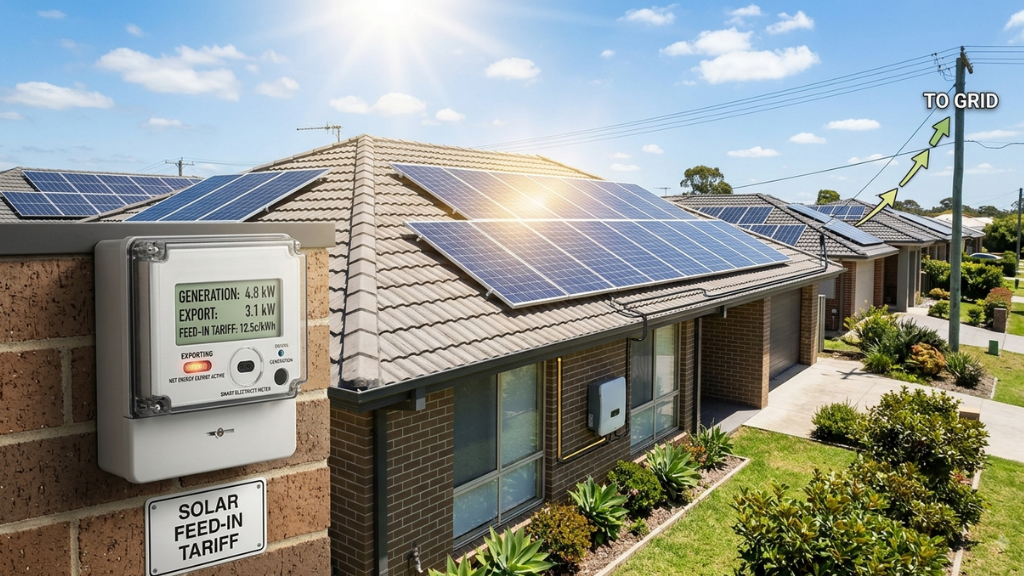
While the upfront investment is substantial, government rebates and incentives make solar more accessible. Additionally, many retailers offer feed-in tariffs, paying you for excess electricity your system feeds back into the grid.
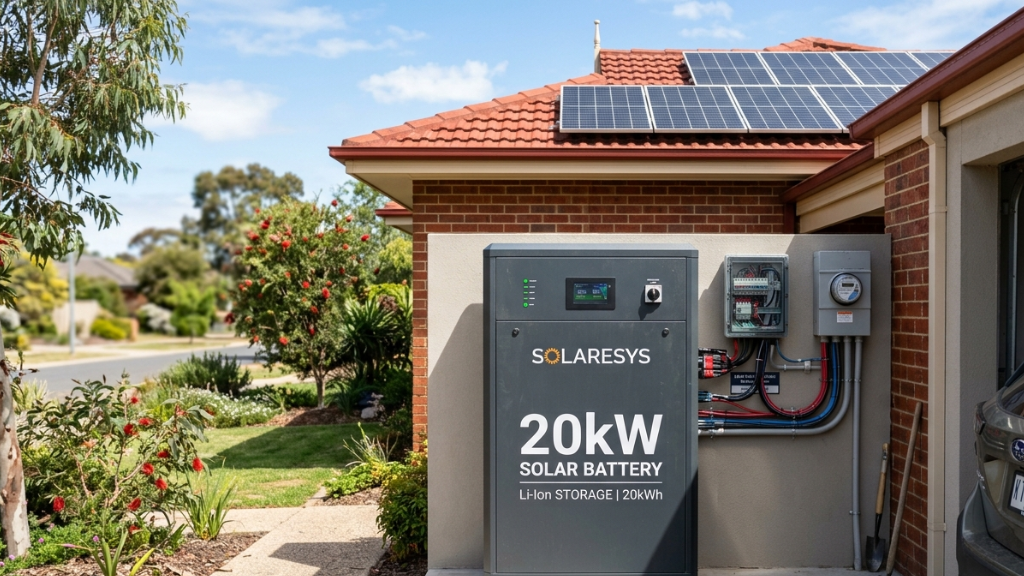
Solar batteries can further maximise savings by storing excess energy for use during peak rate periods or at night when your panels aren’t generating power.
Take Control of Your Energy Costs Today
Start by calculating your current consumption, comparing it to the average for your household size, and identifying your biggest energy users. Then focus on the changes that will deliver the greatest impact, whether that’s adjusting your thermostat settings, switching energy plans, or investing in energy-efficient upgrades.
If you’ve tried all the tips to reduce your electric bill and the costs are still climbing, it might be time to look at a more permanent solution. Solar power is the most effective way to shield yourself from rising energy prices.
So stop guessing and contact SPS Energy today for a professional energy assessment and see how we can help you bring those monthly costs down for good.