Table of Contents
Making the switch to solar energy is an exciting decision, but one of the first questions homeowners ask is: “What size solar system do I need?” In most Australian households, a 6.6kW solar system would be an excellent choice to ensure maximum energy independence.. However, the right solar system size for your home ultimately depends on your energy usage, roof space, and long-term goals.
Let’s break down everything you need to know to make an informed decision.
Understanding Your Energy Consumption
The first and most critical step in determining the ideal solar system size is analysing your current electricity usage.
Daily Electricity Usage (kWh)
Your daily energy consumption, measured in kilowatt-hours (kWh), is the primary driver of your system size. You can find this number easily on your recent electricity bills.
- Average Australian Household: Typically uses between 16 and 20 kWh per day
- Small Household (1-2 people): May use less than 15 kWh per day.
- Large Household or High Energy Use (e.g., A/C, electric car): Can exceed 20 kWh per day.
Daytime vs. Nighttime Use
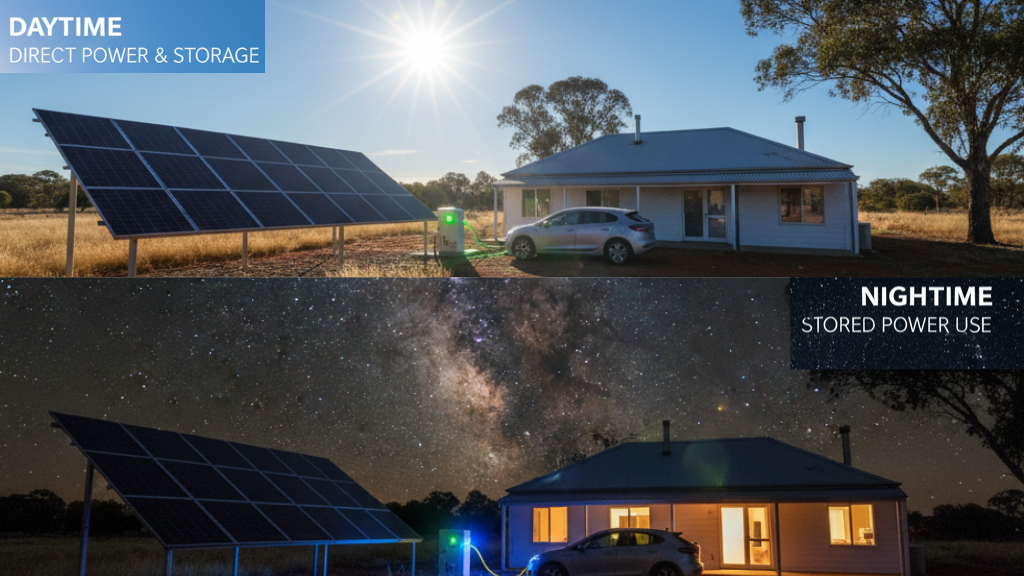
A solar system generates power during daylight hours. To maximise your savings, you want the system to generate enough electricity to cover what you use while the sun is shining (self-consumption).
- If you are home during the day (working from home, retirees), you have high daytime electricity use, which means you can directly use more of the solar power you generate.
- If you are out all day, a smaller system focused on covering essential daytime loads (fridge, standby power) might be sufficient, unless you plan to install battery storage.
Key Factors Influencing Solar System Size
The ideal solar system size is calculated by balancing your daily energy needs with other practical factors.
A. Location and Sun Exposure
The amount of sunlight your home receives (insolation) varies by postcode. Our team considers local weather data to calculate how much power a given solar system size will produce in your specific area.
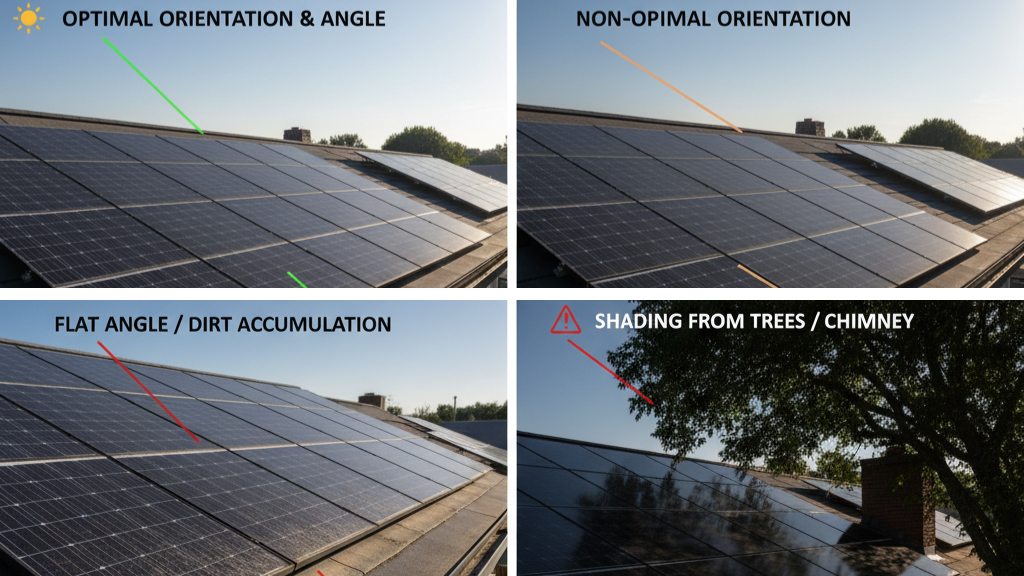
- Roof Orientation and Angle: North-facing solar panels typically generate the most power. East and West-facing arrays are also highly effective, generating power throughout the morning and afternoon, respectively.
- Shading: Any obstruction—like trees or neighbouring buildings can reduce output. High-quality optimisers or micro-inverters can mitigate this impact.
B. Available Roof Space
The physical space on your roof dictates the maximum size of your installation. Standard solar panels are roughly 1.7m x 1.0m, requiring about 1.7m² of roof space per panel.
| System Size | Approx. Number of Panels (400W) | Approx. Roof Area |
| 3kW | 7 – 9 Panels | 12 – 15 m² |
| 6.6kW | 15 – 17 Panels | 25 – 29 m² |
| 10kW | 24 – 26 Panels | 41 – 44 m² |
For a 6.6kW system, the most common size, you’ll need around 25–30 m² of unshaded, usable roof space. To learn more about exactly how many panels are needed for a 6.6kW solar system, check out our detailed guide
C. Budget and Financing
The solar panel rate is a factor, but remember that solar is an investment. Even if you have budget constraints, consider upsizing where possible, as the extra output provides quicker returns. You can use a Solar Power System Calculator and a separate STC calculator to estimate costs and potential savings accurately.
The Calculation: How to Determine What Size Solar System Do I Need
Follow these simplified steps to estimate your required solar system size (kW):
- Find Your Daily Target: Take your daily average energy consumption (e.g., 18 kWh).
- Determine Peak Sun Hours (PSH): This is the average number of effective sunlight hours in your area (e.g., 4 to 5 hours in most of Australia).
- Account for System Losses: Divide by a system loss factor (e.g., 0.8 to 0.85) to account for heat, wiring, and inverter inefficiency.
Formula:
System Size (kW) = Daily kWh Consumption / PSH * System Loss Factor
Example (Average Household in NSW):
System Size (kW) = 18 kWh / 4.5 PSH * 0.82 = 18 / 3.69 = 4.88 kW
In this case, a 5kW solar system or the common 6.6kW solar system would be an excellent choice to ensure maximum energy independence, especially during winter months when solar production drops.
Planning for the Future and Rebates
Future-Proofing Your System
When choosing your solar system size, it’s wise to oversize slightly for future energy demands. Are you planning to:
- Purchase an Electric Vehicle (EV)?
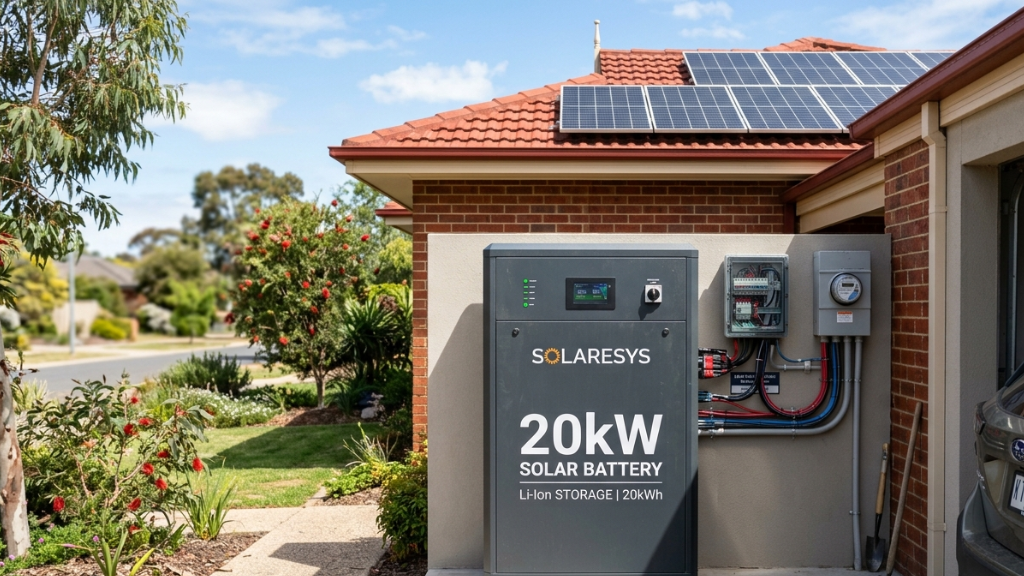
- Install a solar battery for nighttime storage?
- Switch gas appliances (such as a hot water system or heating) to electric?
Each of these changes significantly increases your electricity needs, making a 10kW or even 13kW system a smart investment now. If you plan to get a solar battery, you need more solar panels to charge the battery during the day while also powering your home.
STC Rebates and Incentives
Australia’s Federal Government offers the Small-scale Technology Certificates (STC rebates scheme), which acts as an upfront discount on your solar panel installation cost. The size of the rebate is directly linked to your solar system size and your location. The larger your system, the more STCs you are eligible for, making larger systems significantly more affordable right from the start.
Conclusion
Choosing the right solar system size is a tailored process. While a calculator can provide a good starting point, the best approach is to consult with an expert installer who can consider your unique roof, budget, and long-term energy goals. A properly sized system from SPS Energy guarantees maximum savings, a faster return on your residential solar systems investment, and true energy independence.